
 Book a Meeting
10 DevOps Best Practices That Every Developer Needs to Know


Overview
DevOps best practices include agile project management, shifting left with CI/CD, automation, monitoring, observability, and continuous feedback. These practices enable faster software delivery, higher-quality code, and improved collaboration between development and operations teams. In this blog, we’ll explore these key strategies to help you build a more efficient and resilient DevOps pipeline.
As a business, you might face issues like slow software development cycles and communication breakdowns. If that’s the case, implementing DevOps best practices can be a good strategy.
You see, DevOps is not just a buzzword; it’s a cultural shift and a set of practices that can revolutionize how your business delivers software. By embracing the best DevOps practices, you can unlock several benefits like faster time to market, improved software quality, increased collaboration, and much more.
So, if you’re ready to unleash the power of DevOps in your business, this blog will prove helpful. Scroll ahead to understand some of the top practical strategies that can assist you in making sound business decisions.
What is DevOps? Why DevOps Methodology is Important?
Today, you need the following two facets to thrive as a business:
- Quality
- Speed
Customers expect new features, bug fixes, and constant innovation at a brisk pace. However, traditional development processes often struggle to keep up with the demand.
This is where DevOps steps in, offering a robust methodology to bridge the gap and unlock various benefits. So, before understanding DevOps best practices in depth, you should have a basic know-how of this practice.
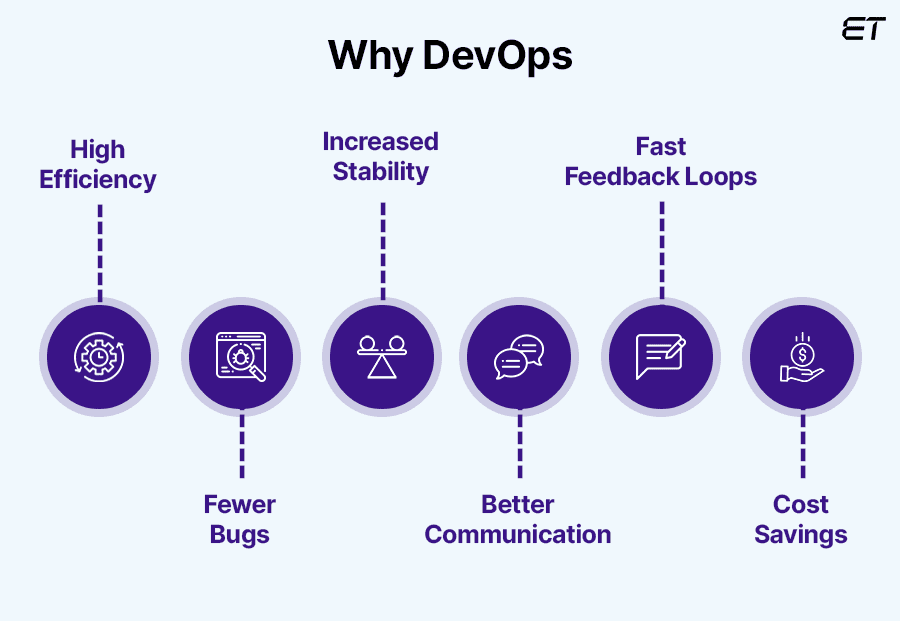
In simple terms, DevOps is a cultural shift that emphasizes collaboration, automation, and continuous improvement. By adopting DevOps best practices, businesses can achieve the following results:
- Streamlined development and deployment cycles
- Fewer bugs and a more stable, reliable software experience
- Better communication leads to a more productive work environment
- Faster feedback loops and a culture of experimentation for quicker iteration
- Elimination of manual tasks leads to significant cost savings in the long run
These are just some compelling reasons why DevOps is becoming crucial for businesses in all domains. In the following sections, we’ll delve deeper into specific DevOps best practices and how you can implement them to transform your software development process.

Need a dedicated team to offer top-notch DevOps consulting? Then contact us with your requirement today!
Top DevOps Best Practices to Follow
As a business, you must be smart about implementing the best DevOps practices. Initially, you can rank the most achievable strategies. This way, your team can move gradually and avoid confusion.
Here are prominent DevOps best practices you can plan to include in your workflow.
(For folks who don’t want to delve deep at the moment, the following table can save time).
| Sr. No. | Best Practice | Description |
| 1. | Agile Project Management | Break down projects into smaller iterations, enabling faster feedback and adaptation |
| 2. | Continuous Integration and Delivery (CI/CD) | Automate building, testing, and deployment for faster and more reliable software delivery |
| 3. | Automation of Recurring Tasks | Free up time and reduce errors by automating tasks like infrastructure provisioning and configuration |
| 4. | Observability and Metrics | Gain deep insights into system health by collecting and analyzing logs, metrics, and traces |
| 5. | Infrastructure as Code (IaC) | Define infrastructure resources in code for consistent, repeatable provisioning and configuration |
| 6. | Continuous Feedback | Gather insights from tools, teams, and users to refine features, improve quality, and resolve issues faster |
| 7. | Collaborative and Ownership Culture | Build cross-team collaboration, shared responsibility, and accountability to improve delivery and trust |
| 8. | Security as Code | Automate and embed security checks directly into the DevOps pipeline to catch vulnerabilities early |
| 9. | Trunk-Based Development | Promote small, frequent code commits to a shared main branch for faster integration and collaboration |
| 10. | Environment Parity | Standardize development, testing, and production environments to avoid deployment surprises |
Now, if you want to understand each DevOps best practice in depth, refer the sections ahead.
1. Agile Project Management

Agile project management is a core principle of the DevOps methodology. Simply put, this standard emphasizes an iterative, flexible approach to software development, complementing DevOps’s fast-paced and collaborative nature.
Here’s how agile project management contributes to DevOps success:
- The agile methodology breaks down projects into smaller, user-focused features. So, you can deliver valuable functionality to customers and gather early feedback to ensure the product stays on track
- By working in short sprints with frequent reviews and planning sessions, your team can adapt to changing priorities from stakeholders
- Further, sprint retrospectives allow teams to reflect on their processes and identify areas for enhancement
- Agile promotes close collaboration between development, operations, and other stakeholders. This culture leads to better communication, shared ownership, and a clear understanding of project goals
So, how can you implement such DevOps best practices? Well, the following tips can be helpful:
- Adopt a Lightweight Framework: Choose a framework (like Scrum or Kanban) that aligns well with your team’s size, project complexity, and company culture
- Prioritize User Stories: Develop user stories that define the features and functionalities desired by the end-users
- Embrace Short Sprints: Work in short sprints (typically 1-4 weeks) to deliver features incrementally
- Daily Stand-up Meetings: Hold short daily stand-up meetings for team members to share progress, identify roadblocks, and plan for the upcoming day
Overall, by integrating agile project management principles into your DevOps best practices, you can create a dynamic and responsive development environment that delivers value quickly and efficiently.
Speaking of agile, do you want to implement this methodology in a fixed-cost project? If the answer is yes, get Agile Strategies for all crucial insights.
2. Continuous Integration and Delivery
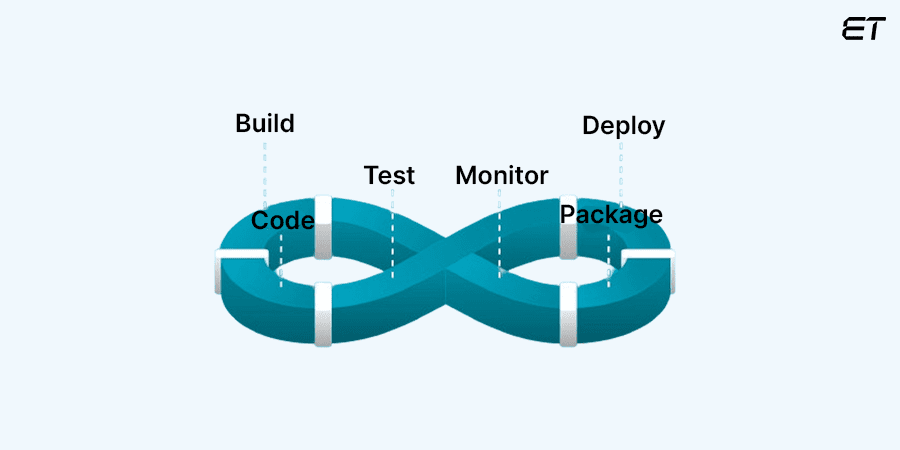
Continuous integration and delivery (CI/CD) drives DevOps philosophy. It is a set of practices that automate the software development lifecycle. Such DevOps best practices allow frequent and reliable delivery of high-quality software.
Here’s a breakdown of the CI/CD process:
| Stage | Explanation |
| Continuous Integration (CI) | Every time a developer commits code changes to the central repository, an automated build and test process is triggered. This action ensures early detection of integration issues |
| Continuous Delivery (CD) | Once the code passes all automated tests in the CI stage, it’s automatically packaged and deployed to the testing environment. This step allows for continuous validation and refinement before pushing updates to production |
So, what are the main benefits of this methodology? Here are the main pointers:
- Faster Time to Market
- Improved Software Quality
- Reduced Risk
- Increased Developer Productivity
To implement CI/CD in your organization, you can follow the tips below:
- Use a centralized version control system like Git to manage code changes and track revisions
- Utilize a CI/CD pipeline tool to automate build, test, and deployment processes. Popular options include Jenkins, GitLab CI/CD, or CircleCI
- Integrate automated unit, integration, and functional tests into your pipeline
- Automate the deployment process to further environments like staging and production
Overall, such DevOps best practices enable your team to innovate faster, deliver higher-quality software, and gain a competitive edge in the market.
3. Automation of Recurring Tasks

Automating recurring tasks is a powerful DevOps best practice that frees up valuable time and reduces the risk of human error.
Here’s how you can leverage the power of automation and bolster your best DevOps practices plan:
- Tools like Terraform and Ansible allow you to automate the provisioning and configuration of critical cloud resources, eliminating the need for manual server setup
- Configuration management tools like Puppet or Chef ensure consistent configuration across all your servers and infrastructure
- You can create scripts and scripting languages like Python or Bash to automate identified tasks
- Also, it is essential to monitor the performance and effectiveness of your automation processes and refine them as needed
Eventually, you can experience the following benefits:
- Increased Efficiency
- Reduced Errors
- Faster Time to Market
- Improved Scalability
So, by embracing automation as a DevOps best practice, you can increase development efficiency, minimize errors, and accelerate software delivery.
What is the difference between DevOps and DevSecOps? Read our blog to find out. DevOps vs DecSecOps
4. Observability and Metrics
There is a high chance you were familiar with the three DevOps best practices above. However, observability and metrics are quite uncommon. Still, together, they can optimize the health of your entire software system.
To understand this practice, let’s understand each term in depth.
Observability is the ability to gain in-depth insights into your system’s internal state and behavior by collecting and analyzing data. This activity goes beyond monitoring system uptime or basic metrics. In essence, you understand the ‘why’ behind system behavior.
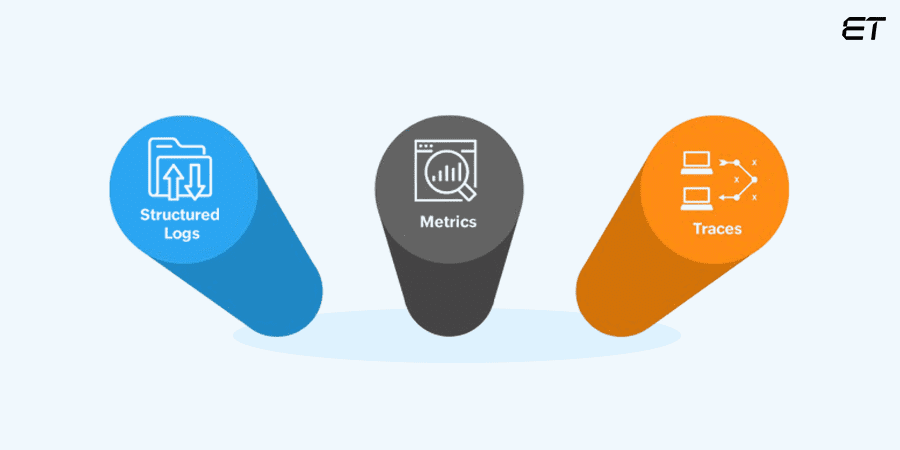
The three vital pillars of observability are as follows:
- Logs: This pillar captures detailed information about events and activities occurring within your system
- Metrics: These components are quantitative measurements of system performance and health. Standard metrics include CPU usage, memory consumption, response times, and error rates
- Traces: The final pillar tracks the flow of a request through your system, providing a detailed picture of how different components interact.
As you can observe, observability and metrics are interconnected.
By analyzing logs, metrics, and traces, you can identify potential issues before they impact users. This proactive approach allows for quicker resolution and minimizes downtime.
In addition, observability data provides a rich context when an issue arises, helping you pinpoint the root cause quickly and efficiently. This facet reduces troubleshooting time and allows for faster fixes. Observability tools provide a single source of truth for system health, fostering better communication and collaboration between development, operations, and security teams.
Overall, by establishing a strong foundation for observability and metrics, you equip your DevOps team with the power to gain deep insights into your system’s inner workings.
5. Infrastructure as Code (IaC)

IaC is an exciting concept that allows you to define your infrastructure resources in code files. These code files help you automatically provision and configure your infrastructure consistently and repeatably.
Popular IaC tools include Terraform, Ansible, and Chef.
So, why is IaC on the list of DevOps best practices? The following advantages will testify to its inclusion:
- Reduced Errors: IaC eliminates the risk of human errors by automating infrastructure provisioning
- Increased Efficiency: You can streamline infrastructure management to focus on higher-level tasks like application development and deployment
- Improved Repeatability: With IaC code, you can replicate infrastructure across different environments, ensuring consistency and reducing configuration drift
- Faster Scaling: IaC allows you to quickly scale your infrastructure up or down by modifying your code
How can you implement IaC in your workflow? Here are some simple steps to consider:
- Select an IaC tool or platform that aligns with your needs and infrastructure type. Consider factors like ergonomics, community support, and integration capabilities with your existing DevOps tools
- Write code files that define the desired state of your infrastructure resources. These files specify the type, configuration, and properties of each resource
- Store your IaC code in a dedicated version control system like Git alongside your application code
- Integrate your IaC tools with your CI/CD pipeline to automate infrastructure provisioning and configuration during deployments
All in all, adopting IaC as a DevOps best practice can streamline infrastructure management, minimize human error, and achieve greater agility in your software delivery process.
6. Continuous Feedback
This one is a core DevOps best practice that ensures every stage of the software development lifecycle (SDLC) benefits from actionable insights. It enables rapid iteration by collecting input from various sources.
These sources can include automated systems, internal teams, and end users. You can then feed the data back into development for continuous improvement.
Here’s a breakdown of the Continuous Feedback process:
| Source | Explanation |
| Automated Monitoring Tools | Tools like Prometheus, Grafana, or New Relic track application performance and infrastructure health, providing real-time alerts and trend data. |
| Team Collaboration Channels | Internal feedback via tools like Slack, Jira, or Confluence helps surface recurring issues, enhancement requests, and blockers directly from developers or ops. |
| User Feedback Systems | Platforms like Hotjar, feedback widgets, surveys, or customer support tickets help gather input directly from end-users, ensuring you’re building what they need. |
So, what are the main benefits of this methodology?
Here’s what makes Continuous Feedback essential:
- Improved Software Quality
- Faster Issue Resolution
- Better Alignment with User Needs
- Higher Customer Satisfaction
- Informed Decision-Making
To implement Continuous Feedback in your organization, you can follow these actionable tips:
- Integrate APM (Application Performance Monitoring) tools to detect and report runtime issues automatically
- Set up feedback loops with internal stakeholders through retrospectives, standups, or team dashboards
- Use analytics tools to track user behavior and derive insights into feature usage and bottlenecks
- Create mechanisms for customers to share their feedback easily, like in-app surveys or helpdesk integrations
- Feed collected data into your backlog refinement process to ensure it influences upcoming development cycles
Overall, Continuous Feedback bridges the gap between development, operations, and users.
7. Collaborative and Ownership Culture
Creating a culture of collaboration and shared ownership is a foundational DevOps best practice that empowers your teams to work more efficiently, communicate better, and deliver higher-quality software.
Here’s how you can build such an environment within your DevOps environment:
- Encourage cross-functional teams where developers, operations, QA, and security professionals work together from planning to deployment
- Promote blameless post-mortems to focus on learning and continuous improvement rather than fault-finding
- Establish clear ownership of services and components so team members are accountable and invested in the success of their work
- Use collaboration tools like Jira, Confluence, or Slack to streamline communication and create transparency
- Invest in regular training and knowledge-sharing sessions to build trust, improve skills, and align goals across teams
This approach leads to significant cultural and operational benefits as follows:
- Better Communication
- Faster Problem Resolution
- Higher Team Morale
- Improved Software Stability
- Stronger Sense of Accountability
All in all, by creating a collaborative and ownership-oriented culture, you develop a DevOps environment that’s agile, resilient, and ready to scale.
Would you prefer IT staff augmentation or recruit a full-time employees? Find out the most suitable strategy to implement DevOps. IT Staff Augmentation vs Full-time Hiring.
8. Security as Code (SaC)
Security as Code is becoming an indispensable part of mature DevOps pipelines. It means embedding security controls and policies directly into your development and deployment workflows.
Here’s how Security as Code enhances your DevOps lifecycle:
- It enables early detection of vulnerabilities through automated security scanning during code commits and CI/CD processes
- You can integrate security tools as plugins in your pipeline, enabling developers to catch and fix issues before they reach production
- Teams can define security rules, compliance checks, and policies in code repositories, ensuring consistency across environments
- SaC fosters a shift-left mindset where developers take ownership of security from the beginning rather than leaving it to a siloed team later
So, how can you implement such DevOps best practices? Try the following steps:
- Automate Security Scans: Use tools like Snyk, SonarQube, or OWASP Dependency-Check to scan code and dependencies
- Define Security Policies as Code: Write configuration-based rules using tools like HashiCorp Sentinel or Open Policy Agent (OPA)
- Run Static and Dynamic Analysis: Integrate static code analysis (SAST) and dynamic application testing (DAST) early in your pipeline
- Educate Developers: Train teams to understand secure coding practices and how security fits into DevOps workflows
By adopting Security as Code, you instill a proactive security culture throughout the software delivery lifecycle.
9. Trunk-Based Development
Trunk-based development is a powerful branching strategy that supports faster, cleaner, and more collaborative DevOps pipelines. Instead of maintaining multiple long-lived feature branches, developers work in short-lived branches and merge code frequently into a central ‘trunk’ or ‘main’ branch.
Here’s why this approach works well in DevOps environments:
- It encourages small, incremental code changes, which are easier to test, review, and integrate
- By committing frequently, developers reduce the risk of painful merge conflicts and integration failures
- Trunk-based development also paves the way for continuous integration and delivery, as the main branch always reflects the latest stable code
- It promotes team collaboration and code visibility, since everyone works close to the trunk and shares updates frequently
Here’s how you can implement such DevOps best practices:
- Adopt Feature Flags: Use feature toggles to control the release of unfinished features without branching
- Enforce Code Reviews: Even with fast merges, ensure every commit is reviewed and approved
- Automate Tests: Set up your pipeline to run unit, integration, and end-to-end tests on each merge
- Limit Branch Lifespan: Keep branches alive for no more than a day or two, and merge often
Trunk-based development aligns perfectly with the principles of fast feedback, minimal risk, and collaborative engineering.
10. Environment Parity
This practice ensures that all your development, testing, staging, and production environments are as identical as possible. The idea is to eliminate surprises during deployment by removing inconsistencies between environments.
Here’s why environment parity is a must in DevOps workflows:
- You can catch bugs earlier in environments that closely mirror production
- It improves reliability and confidence during deployments since behaviors remain consistent across stages
- When environments are standardized and automated, your teams can scale and maintain them with less manual intervention
So, how can you implement such DevOps best practices? Follow these steps:
- Use Containers: Docker and similar tools allow you to package applications with all dependencies, ensuring identical behavior across environments
- Automate Environment Provisioning: Tools like Terraform and Ansible can spin up consistent environments from code
- Version Everything: From environment configuration files to secrets, treat all assets as version-controlled code
- Run Pre-Production Tests: Regularly test in staging environments that are production clones to catch last-minute issues
Environment parity makes your entire delivery pipeline smoother, faster, and more predictable.
Are You Ready to Implement DevOps Best Practices?
By now, you’ve explored the critical DevOps best practices that can enhance your software development cycle and workflow. These practices promote collaboration, automation, and continuous improvement, leading to faster delivery, higher quality software, and a more efficient development environment.
To start, you must define what you hope to achieve by implementing DevOps best practices. Then, implement one or two DevOps best practices that align with your goals and team capabilities. As you gain quantifiable results, it becomes easier to implement other practices.
It is crucial to understand that to get the best results, you should promote open communication, shared ownership, and a willingness to learn from each other. So, implementing the best DevOps practices is a continuous effort.
How can we be helpful? Well, our vetted professionals already follow several DevOps best practices. So, you can contact us and outsource some of your requirements to close any skill gaps in your existing team.
Frequently Asked Questions
1. What are the five levels of DevOps best practice?
There aren’t necessarily five distinct levels of DevOps best practice adoption, but rather a spectrum. You can start with foundational practices like agile project management and progress to more advanced techniques like Infrastructure as Code (IaC). The key is continuously improving and iterating on your DevOps practices to fit your specific needs.
2. What are the three P’s of DevOps?
The three Ps of DevOps are People, Process, and Tools. ‘People’ includes the cultural shift and collaboration between development, operations, and security teams. Next, ‘process’ refers to methodologies like Agile and CI/CD that streamline development. Finally, ‘tools’ automate tasks and integrate workflows to enhance efficiency.
3. Who invented DevOps?
DevOps emerged from the collaborative efforts of software development and IT operations professionals. However, Patrick Debois is often referred to as the ‘father of DevOps.’


How Enterprise Web Portal Development Supports Multi-Plant Operations
I once spoke with an operations leader at a US-based manufacturing firm. They had grown from two plants to seven…

GraphQL vs REST APIs: Differences, Performance, and When to Use Each
REST and GraphQL are two different approaches to designing APIs that allow applications to communicate with servers. GraphQL vs REST…


