
 Book a Meeting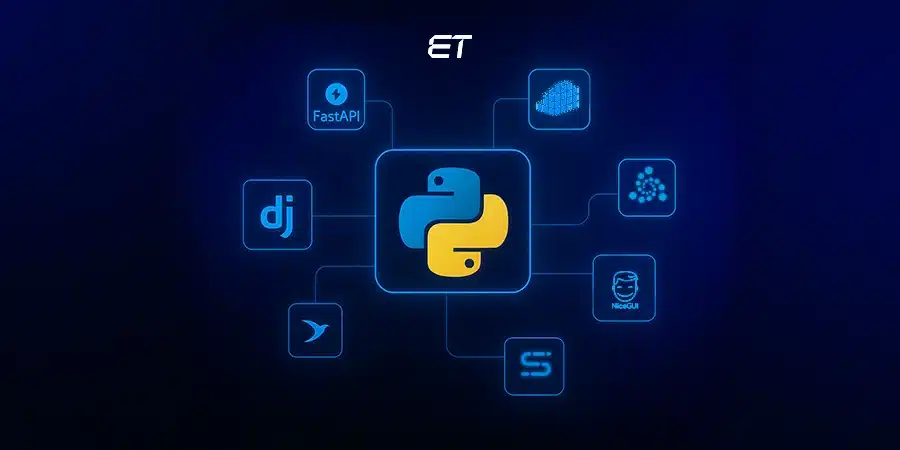

- Python web frameworks support projects of all sizes and complexities.
- Django excels in rapid development, scalability, and built-in security features.
- FastAPI delivers unmatched speed with async support for high-performance APIs.
- Flask provides lightweight flexibility for minimalistic web application design.
- Sanic enables lightning-fast asynchronous processing for real-time apps.
- The right choice depends on future goals, team strengths, and performance needs.
Consider a scenario –
You’re ready for your next web project and decide to choose a Python framework to make development easier. Focusing on speed and execution, you pick the framework that gets the job done swiftly.
However, a few months later, complicated integration, security issues, and poor scalability start slowing down workflows. Your dev team is frustrated, while deadlines loom around the corner.
Where did it all go wrong?
This happens when you select a framework without careful consideration. One wrong choice can lead to technical debt, burn resources, and swallow timelines.
To prevent all that, this post explores the best Python web frameworks, their benefits, and use cases. We’ll also give you tips to choose a platform wisely.
Let’s get that project started!
Need technical guidance for your next web project?
Why are Python Web Frameworks Important for Businesses?
Let’s begin by understanding what is Python web framework. It’s a collection of pre-built components for URL routing, request/response handling, session management, and database ORM, making development convenient.
Thanks to the growing demand for web apps and dynamic websites, the Python web frameworks market may reach USD 4.5 billion by 2032. Here are some more reasons why businesses choose these frameworks:
- Faster Time-to-Market – The pre-built modules and concise syntax help launch web apps faster and reduce time-to-market.\
- Cost-Effectiveness – These frameworks are mostly open-source, enabling free access to libraries and reducing development costs.
- Scalability – Frameworks handle traffic spikes and feature expansion without major rewrites, supporting projects from startups to enterprise-level businesses.
- Security and Compliance – Built-in safeguards ensure regulatory compliance and prevent threats like SQL injection, CSRF attacks, and unauthorized access.
A web application framework in Python will fall under one of these categories:
- Full-Stack Frameworks – Offer end-to-end tools for rapid, structured builds. Ideal when teams need all features in one place.
- Micro-Frameworks – Lightweight and flexible, giving developers freedom to choose components.
- Asynchronous Frameworks – High-performance for real-time apps, critical when speed and concurrency matter.
Next, we’ll look into the Python web frameworks belonging to each type in detail.
7 Leading Python Web Frameworks for Modern Development
Here’s a quick comparison of leading Python web frameworks.
| Name | Key Features | Best For |
| Django |
|
Large, full-featured apps prioritizing scalability and rapid development. |
| Pyramid |
|
Flexible apps for small sites or enterprise systems. |
| Flask |
|
Small-to-medium apps or APIs needing flexibility. |
| NiceGUI |
|
Quickly building modern, interactive web UIs in Python. |
| FastAPI |
|
High-performance APIs and async microservices. |
| Falcon |
|
Mission-critical APIs needing performance and reliability. |
| Sanic |
|
Fast, scalable services with async capabilities. |
Now, let’s dive deep into the essential details of these web technologies.
1. Django
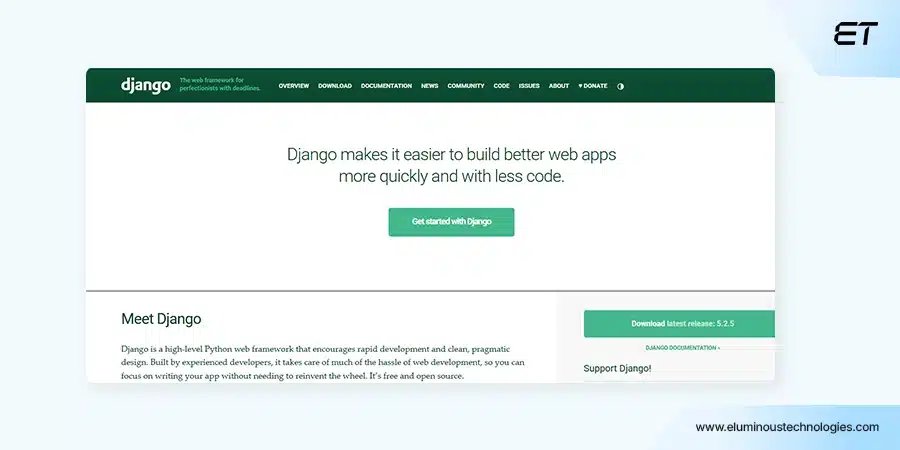
Our collection of Python web frameworks starts with Django, a full-stack framework popular for building web apps. It’s open source and comes with built-in components for handling everything from database operations to security.
As per the 2026 Stack Overflow Developer Survey, 12.6% of developers prefer Django over other platforms.
Key Features
- Rapid Development Framework – Get apps/web portals from concept to launch swiftly with built-in tooling and workflow.
- Comprehensive Feature Set – Includes authentication, admin panel, sitemaps, RSS feeds, and more out of the box.
- Secure Design – Protects against SQL injection, XSS, CSRF, and clickjacking via default safeguards.
- High Scalability – Supports high-traffic platforms with flexible, high-performance architecture.
These features make Django a go-to choice for large, scalable applications.
Best For
Teams building complex, data-driven applications that require robust security and scalability. Enterprises and startups can manage high growth or traffic without compromising code quality using Django.
For example: A secure, scalable e-commerce platform handling 10K+ daily transactions while maintaining flawless performance.
Searching for reliable full-stack developers?
2. Pyramid

Next up on our Python web frameworks list is Pyramid, another full-stack platform that scales simple prototypes to enterprise-grade apps. It offers a “start small, finish big” philosophy, letting developers choose components like databases and templating engines.
The modular design lets you add complexity when your project demands it, making it a strong fit for long-term scalability.
Key Features
- Highly Configurable – Begin with a single file “Hello World” app and grow using scaffolds and add-ons.
- Add-on Flexibility – Choose templates (Jinja2/Chameleon), databases, security tools, and more via a curated plugin ecosystem.
- Extensible Architecture – Keeps wiring separate from code; enables clean extensibility and avoids framework-imposed decisions.
- Proven Stability – 100% test coverage and long-term API stability ensure maintainability for real-world projects.
Besides, the architecture is also extensible, supporting plugins and third-party integrations.
Best For
Projects that can evolve, where flexibility, security, and maintainability are prime from day one. It’ll suit teams needing a customizable framework that balances minimalism with enterprise functionalities.
For example: A flexible multi-department intranet portal evolving over time, with customizable modules, strong security, and maintainability.
Explore how project discovery boosts overall success.
3. Flask
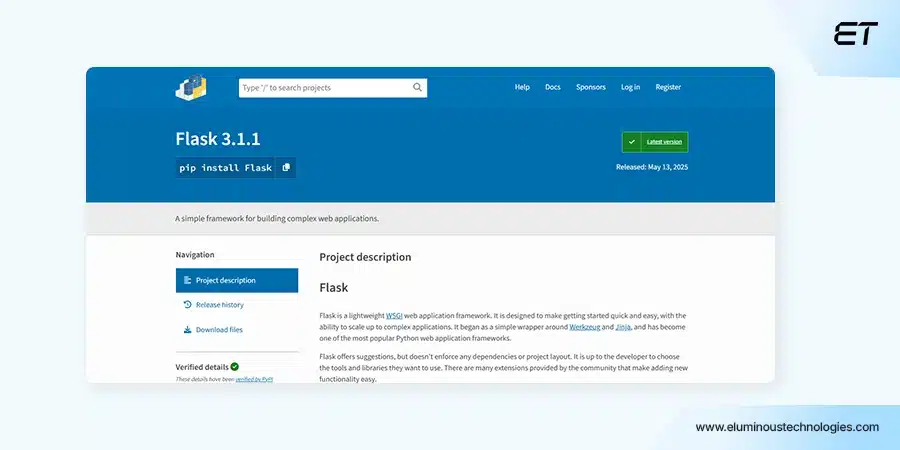
Flask is a web application framework in Python that falls under the micro-framework category. It’s a lightweight toolkit with only the essential tools to start building web applications. Developers can choose additional components as needed.
The minimalistic design makes it easy to learn while remaining powerful enough for complex projects through extensions. Flask is widely adopted for APIs, small to medium web apps, and rapid prototyping.
Key Features
- Minimal Core – Ships with essentials like routing, request handling, and templating, leaving architecture choices to developers.
- Extension-friendly – Supports rich third-party libraries for databases, authentication, caching, and more.
- Faster Development – Includes a debugger and reloader for swift development cycles and easier troubleshooting.
- REST API Readiness – Ideal for creating lightweight APIs with JSON support and flexible request handling.
Moreover, famous platforms like LinkedIn and Pinterest use Flask.
Best For
This is among the best Python web frameworks for enjoying flexibility, quick setup, and control over your tech stack. With few framework-imposed restrictions, it’s ideal for lean and modular development.
For example: A lightweight SaaS dashboard with modular features, quick setup, and full control over the tech stack.
4. NiceGUI

Our next entry on the top Python web frameworks list is NiceGUI, which creates browser-based graphical interfaces using Python code.
It tackles dashboards, robotics projects, smart-home control panels, and rapid tooling environments, letting developers build rich interactive UIs. No need to write HTML, CSS, or JavaScript!
Key Features
- Interactive Browser UI – Build GUI elements like buttons, sliders, dialogs, and 3D scenes directly via Python.
- Real-time Updates – Updates the UI in real time whenever you modify Python code.
- Rich Component Library – Includes plots, virtual joysticks, tables, foldable trees, and Markdown.
- Flexible Layouts and Data Binding – Arrange rows, columns, cards, and dialogs. Get simple binding and timers even for low-latency updates.
Plus, it’s user-friendly for beginners and has advanced customization for seasoned developers.
Best For
Developers who want to create interactive web interfaces entirely in Python, avoiding complex front-end stacks. Delivering dashboards, control panels, or custom tools with minimal setup is convenient with this framework.
For example: A real-time IoT device control panel with interactive dashboards, built entirely in Python without complex front-end stacks.
5. FastAPI

We’ll now discuss an asynchronous framework called FastAPI, known for being high-performance and easy to learn. It uses Python type hints to automatically validate data and generate interactive API documentation.
Built on an asynchronous core, it handles everything from small prototypes to large-scale microservices. This improves code testing efficiency, keeps it clean, and highly maintainable.
Key Features
- Type-driven Validation and Serialization – Python type hints and Pydantic models enable automatic parsing, validation, and response generation.
- Automatic Interactive Docs – Generates OpenAPI docs with Swagger UI and ReDoc, plus customizable routes and metadata for easy testing.
- High-performance Async Stack – Uses Starlette and Uvicorn for fast I/O, WebSockets, and background tasks, for scalable performance.
- Excellent Security Features – Supports easy dependency setup, OAuth2 with JWT, scopes, and flexible authentication options.
Also, great editor support helps reduce errors and debugging time.
Best For
Organizations building REST/GraphQL APIs, event-driven services, or gateways needing async performance.
For example: A real-time analytics API with async processing, strict validation, and auto-generated interactive documentation.
6. Falcon

Another one of the popular Python web frameworks is Falcon, a minimalist platform for building app backends and microservices. It emphasizes correctness, reliability, and speed. Firms like LinkedIn and PayPal rely on it for these efficient functionalities.
Key Features
- Comprehensive Architecture – Resource-based classes implement HTTP method handlers for clean, predictable, and scalable RESTful APIs.
- Flexible and Extensible – Offers ample customization, with community add-ons and packages for extended functionality.
- Simple Debugging – It documents errors, keeps logic paths simple, and indicates which inputs lead to certain outputs.
- Compatible – The ASGI (Asynchronous Server Gateway Interface) and WSGI (Web Server Gateway Interface) make it compatible with multiple servers.
Falcon doesn’t hide important parts of your app behind “invisible” shared variables. So you always know where data comes from and how it processes requests.
Best For
Developers building high-performance APIs or microservices that demand low latency and better control. Falcon offers long-term stability across diverse server environments.
For example: A payment gateway microservice with low latency, accurate request handling, and reliable performance across different server environments.
7. Sanic

Sanic is a lightweight asynchronous platform and is our last entry for the Python web frameworks collection. The framework handles large volumes of concurrent requests with minimal downtime.
Utilizing Python’s async/await syntax, Sanic helps developers who know asynchronous programming build faster.
Key Features
- High-performance and Scalability – Engineered for high speed and concurrency, capable of powering small apps to large-scale platforms.
- Production Ready – Ships with a built-in web server, allowing immediate deployment for production-grade web applications.
- Community Driven – It has an active developer community, offering continuous improvements and development solutions.
- Simple and Lightweight – Minimalistic API with smart defaults, enabling quick setup and fast development without unnecessary complexity.
Plus, Sanic’s DEV mode error page helps you understand and debug errors efficiently.
Best For
Building real-time apps, APIs, and event-driven systems that require efficient asynchronous processing. Appropriate for developing high-speed web services.
For example: A chat app supporting thousands of users with instant messaging, live updates, and multiple events.
How to Choose the Right Python Web Framework for Your Business?
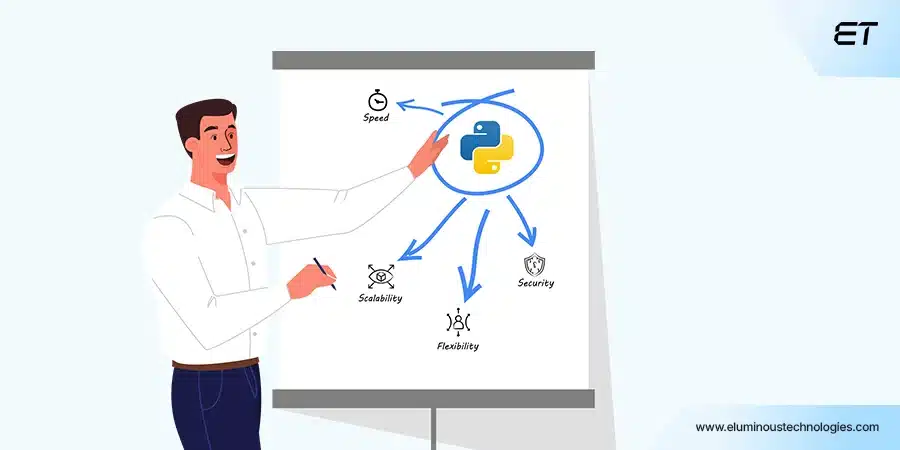
After gathering a solid idea about various Python web frameworks, it’s time to select one for your business. But wait, you still have to be methodical about it. Align framework choice with business targets, core project needs, team expertise, and growth goals.
These tips will make the selection process easier for you.
- Assess Learning Curve – Choose frameworks matching existing team skills to speed up onboarding and reduce errors.
- Match Framework to Project Scale – Select full-stack for complex apps; micro-frameworks for lean, focused services.
- Check Framework Community Support – Ensure the framework has an active community to get rich plug-ins, updates, and patches for enhanced development. It also helps resolve queries faster.
- Evaluate Security Capabilities – Look for built-in protections like CSRF, XSS prevention, and robust authentication tools.
Also, don’t give in to the hype of a framework. Analyze whether it will be relevant for long-term development before choosing it.
No time to choose the right project tools?
To Sum Up
As a tech leader, you’ll have plenty on your plate most of the time. So, choose the Python web frameworks aligned to your team’s strengths and long-term scalability to ease the process.
For enterprise stability and a feature-packed foundation, Django is a commendable choice. If you need API-driven products that are fast and async; FastAPI, Falcon, or Sanic deliver.
Meanwhile, newer entrants like NiceGUI can give you a rapid visual edge with a low learning curve.
Discuss among key decision-makers, experiment with multiple tools, and pick one that reduces time to market.
In short – select wisely, build fast, and let your framework work for you.
Accelerate time-to-market with our expert developers.
Frequently Asked Questions
1. Is Python Django frontend or backend?
Django falls under the backend Python web frameworks category, handling server-side logic, databases, and APIs. However, it can also render HTML templates for basic front-end support.
2. What security features do modern Python Web Frameworks offer?
Python web frameworks offer security features like built-in authentication, XSS protection, CSRF protection, and SQL injection prevention to safeguard apps from vulnerabilities.
3. How do Python web frameworks handle scalability for high-traffic applications?
Python web frameworks handle scalability via asynchronous processing, load balancing, caching, and database optimization. This enables efficient resource usage and consistent performance under heavy app traffic.

Web Application Architecture for Enterprises: Components, Types, and Best Practices
Web application architecture is the structural blueprint that defines how a web application is designed, built, deployed, and scaled. It…


How to Conduct Technical Due Diligence for Offshore Software Companies
You’re on a Zoom call with a potential offshore software partner. The deck looks flawless; sleek UI mockups, confident faces,…


