
 Book a Meeting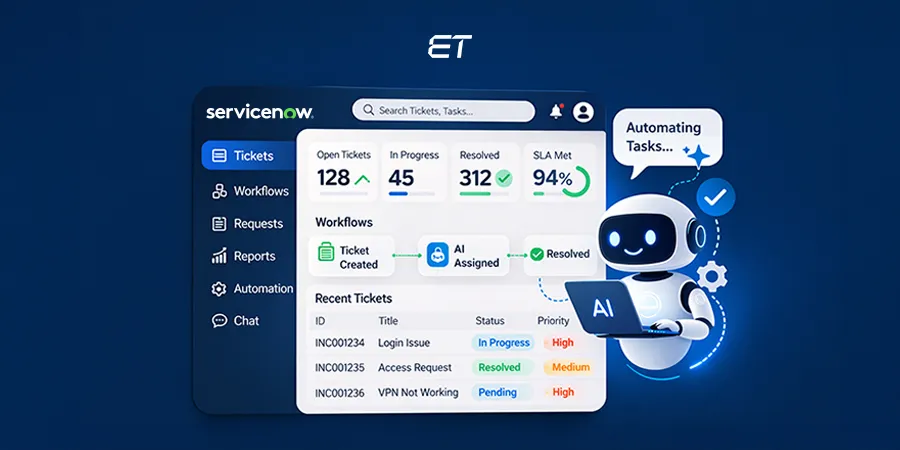
ServiceNow GenAI: What It Can Do for Your Company


- ServiceNow GenAI brings generative AI directly into enterprise workflows, helping teams automate tasks efficiently.
- Built into the Now Platform, it uses workflow context and enterprise data to produce more relevant and useful outputs.
- Capabilities like Now Assist help IT, HR, and customer support teams resolve issues faster and reduce repetitive work.
- For enterprises already using ServiceNow, GenAI offers a practical way to streamline workflows and enhance user experiences.
We remember how a client struggled to make sense of all the data, tickets, and requests flying in from every direction. It felt like everyone was putting out fires instead of actually moving work forward. And that’s when we got excited about using ServiceNow GenAI.
Put simply, it’s a unique way to bring generative AI directly into the workflows you already use every day. Think of it as having a smart assistant that helps your team create content, automate tasks, and make decisions faster.
Now, you’re probably hearing about GenAI everywhere, but it’s hard to separate hype from what truly matters. So, we’ll walk you through what ServiceNow GenAI is, how it fits into your enterprise operations, and why we got excited to implement it.
By the end of this post, you’ll have a clear picture of the GenAI’s impact and a few ideas on how you can put it to work for your teams tomorrow.
What is ServiceNow GenAI?
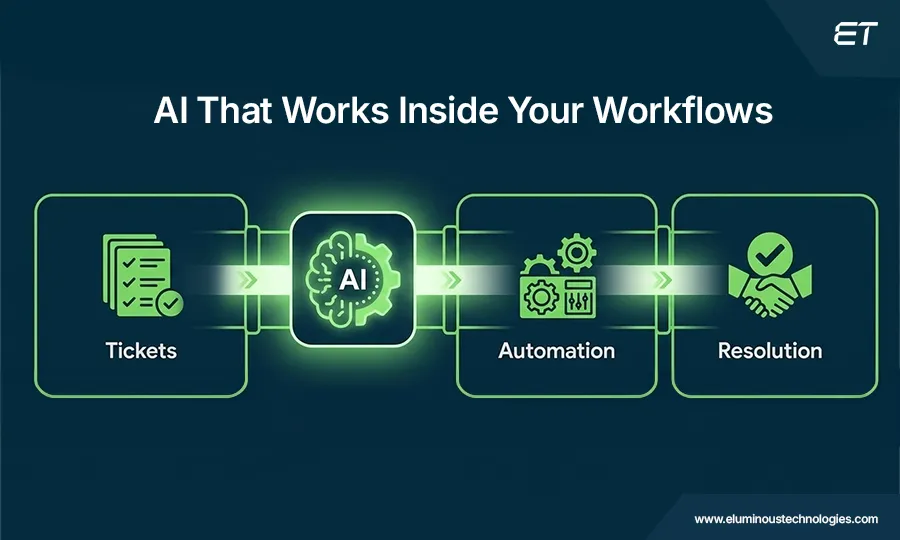
At its core, ServiceNow GenAI is about putting generative AI to work for your teams who handle workflows, dashboards, and apps. It’s not some standalone tool you have to babysit.
GenAI in ServiceNow is baked into the Now Platform, which means it knows the context of your business data, tickets, requests, and processes.
Think of it like this: instead of asking someone to dig through multiple systems to write a report, generate a response, or summarize data, GenAI can do it in seconds. It can:
- Draft knowledge articles
- Suggest ticket resolutions
- Auto-generate email responses
- Design new workflows.
The best part? This happens while you’re staying within your company’s security and compliance boundaries. To give you a clear picture, here’s a glance at ServiceNow GeanAI’s pros and cons:
| Pros | Cons |
| Works directly inside the ServiceNow Now Platform, so you don’t need to jump between tools. | If you have poorly structured data or immature workflows, you may not see strong results immediately. |
| Features like drafting responses, summarizing tickets, and generating documentation through Now Assist can reduce manual work. | Generative AI capabilities are usually part of premium tiers or add-ons, which may increase platform costs. |
| The ServiceNow Generative AI Controller helps manage prompts, models, and data security within enterprise boundaries. | Like any GenAI system, responses can be imperfect and need proper validation. |
| Because the AI works within ServiceNow workflows and enterprise data, outputs tend to be more relevant than standalone AI tools. | To get the most value, you need workflow optimization, governance policies, and training. |
| You can integrate different AI models depending on governance and performance needs. | Your teams need time to adapt to AI-assisted workflows and trust automated suggestions. |
Our ServiceNow PM describes it as having a teammate who never sleeps, never misses a detail, and understands your company’s processes with little briefing. Unlike generic AI tools, ServiceNow GenAI isn’t just guessing. It learns from your workflows, your data, and your rules, so the outputs are relevant and usable from day one.
By now, you’re probably wondering: “Okay, that sounds cool. But what does it actually mean for my teams?”
That’s exactly what we’ll get into next: the ways you can use GenAI to save time, reduce errors, and make your workflows smarter.
Why You Should Care About ServiceNow GenAI
Let’s be honest: Your inbox is already overflowing, your teams are juggling a dozen tools, and efficiency is an all-out survival. That’s where ServiceNow GenAI comes in.
We’ve seen it in action, and the impact is real. Your teams can:
Save hours on repetitive work: Auto-drafted responses, knowledge articles, and workflow suggestions mean your people spend less time on grunt work.
Reduce errors and improve consistency: GenAI doesn’t forget context, compliance rules, or standard procedures, so mistakes drop dramatically.
Boost decision-making: Quick summaries, data-driven insights, and suggested actions speed planning and problem-solving.
The bottom line?
If you’re still relying on manual processes, you’re leaving productivity and potentially revenue on the table. And we know you don’t want that.
How ServiceNow GenAI Works
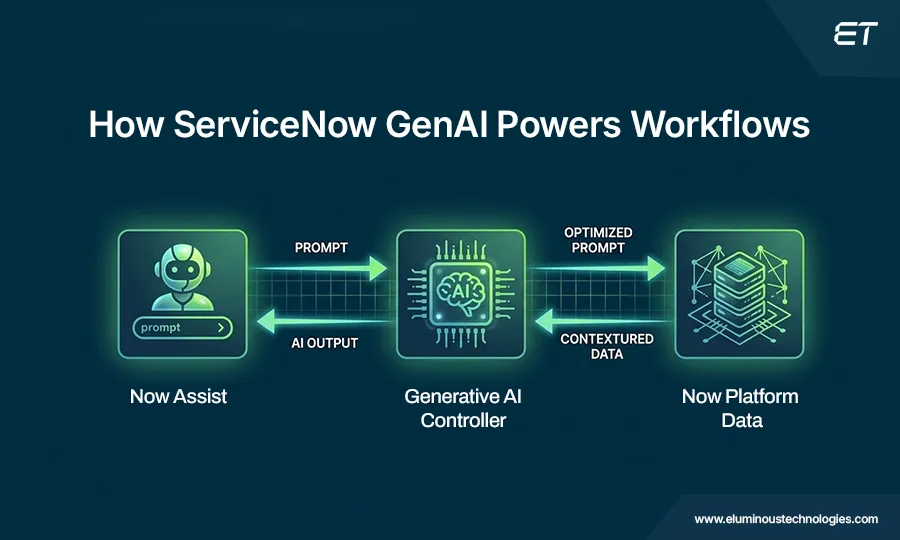
When we talk about ServiceNow GenAI, it’s not about a single feature.
What ServiceNow has really done is embed generative AI across the Now Platform, so it becomes part of the workflows your teams already use.
Under the hood, it has a few core components that work together to deliver AI-powered experiences. Don’t worry, you don’t compromise security or governance with them.
- First, there’s Now Assist. This is the user-facing layer of GenAI. Your teams interact with it directly to generate responses, summarize tickets, draft knowledge articles, or get recommendations while working through requests and incidents.
- Then there’s the Generative AI Controller, which serves as the orchestration engine. It determines how the platform processes prompts, which LLM to use, and how responses are returned to workflows.
- Finally, everything runs within the data boundaries of the Now Platform, meaning the AI operates within the context of your organization’s workflows, policies, and historical data. That context makes the outputs useful rather than generic.
This architecture matters because it gives you flexibility. You’re not locked into a single AI model, and you maintain control over governance, security, and how AI interacts with enterprise data.
Key Features of ServiceNow GenAI
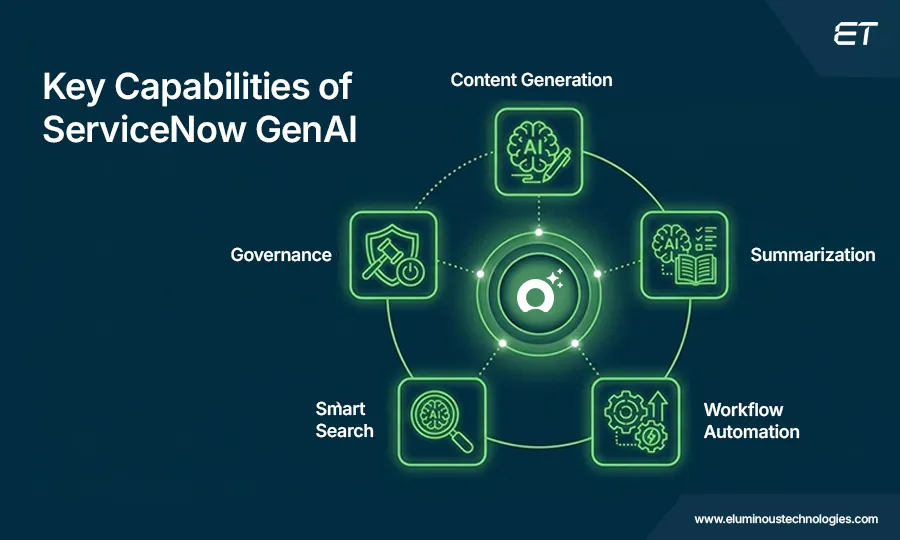
Once you start exploring ServiceNow GenAI, you’ll notice it isn’t just one capability. It has a lot of AI operating to make workflows faster, smarter, and easier.
Here are some of the features that stand out the most.
AI-Powered Content Generation
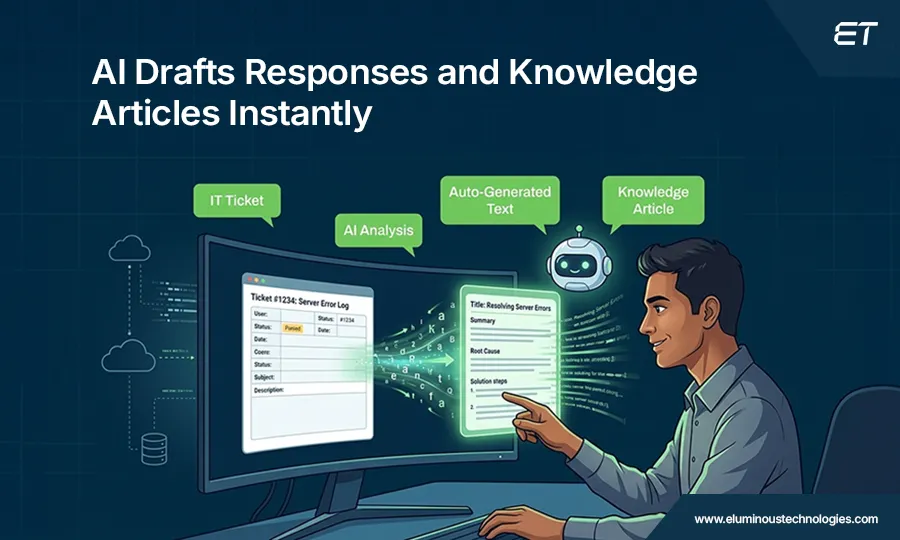
Your teams write a lot more than you might realize. And we’re not talking only about content writers.
We’re mentioning incident responses, knowledge articles, internal updates, case summaries, and more. With Now Assist, ServiceNow GenAI can automatically draft this content based on the context of a ticket or request.
For example, if a support engineer resolves a complex issue, GenAI can instantly generate a knowledge article based on the resolution. So, instead of writing documentation from scratch, your team simply reviews and publishes it.
It’s a simple change, but it saves hours every week. But again, don’t rely on it for niche thought leadership articles or blogs.
Intelligent Summarization
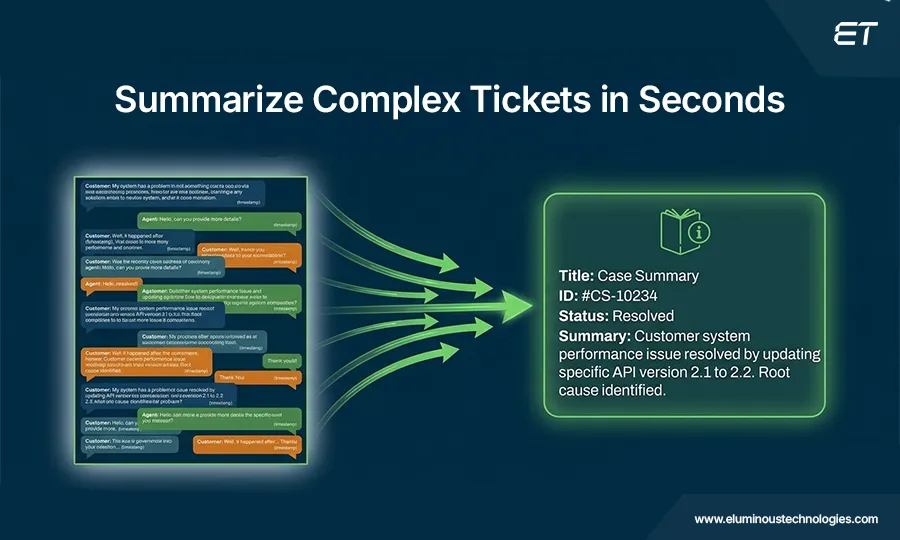
Let’s say a support ticket has gone through ten different updates across multiple teams. Reading the full thread just to understand the issue wastes time.
ServiceNow GenAI can summarize incidents, chats, and case histories into a few clear sentences. That means when a new engineer picks up a case, they immediately understand what’s happening and what failed.
We’ve seen this dramatically reduce handoff delays in IT and customer support teams.
AI-Assisted Workflow Creation
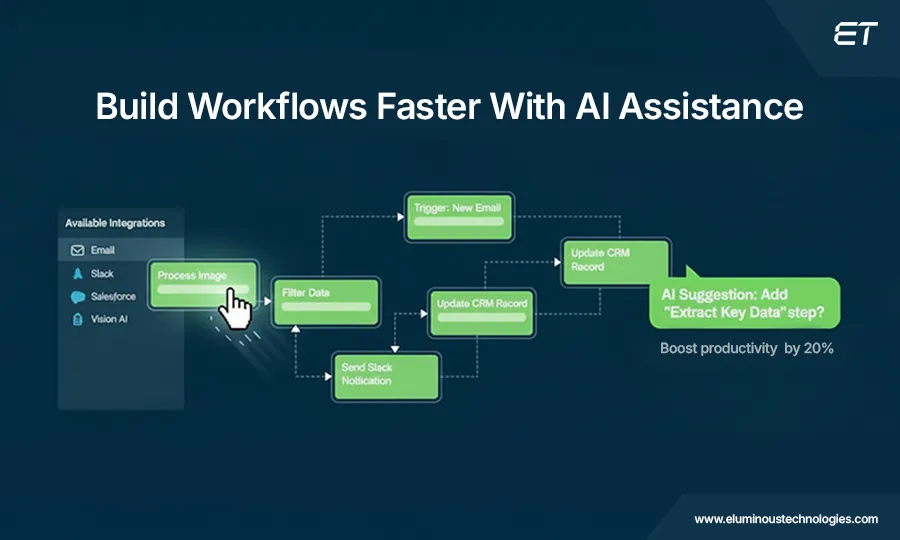
Designing workflows in the Now Platform usually requires planning, configuration, and testing.
GenAI helps generate workflow suggestions or assist with automation logic based on simple prompts. Instead of building everything manually, your teams can start with AI-generated workflow drafts and refine them.
It speeds up development without replacing the control your teams already have. It’s more like a handy assistant that doesn’t need coffee.
Smart Search and Knowledge Recommendations
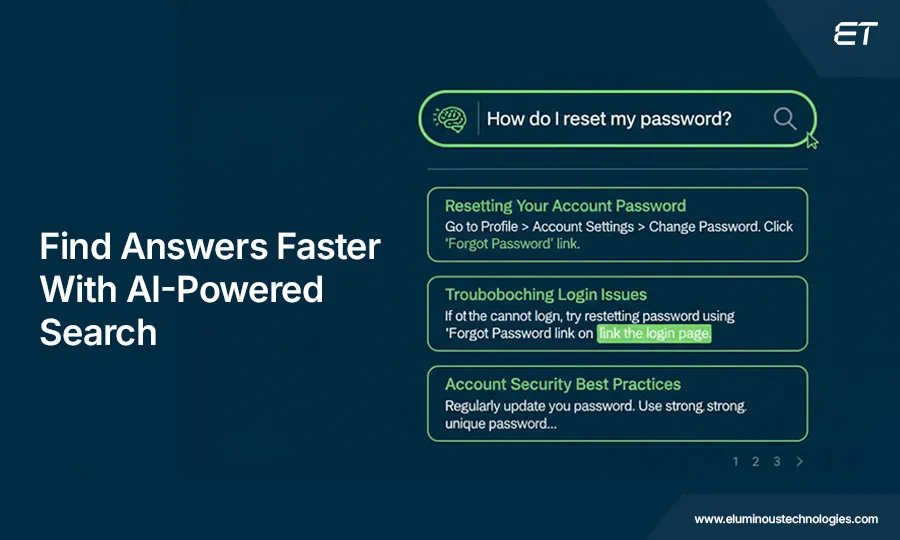
Finding the right information inside large knowledge bases can be frustrating. It’s like going through your closet to find that much-needed pair of socks. But GenAI can help, at least in the former situation.
It runs on the platform to make search much more conversational. Instead of digging through documents, you can ask questions and receive contextual answers drawn from internal knowledge articles and records.
In practice, that means faster resolutions and fewer repetitive support tickets.
Secure AI Governance
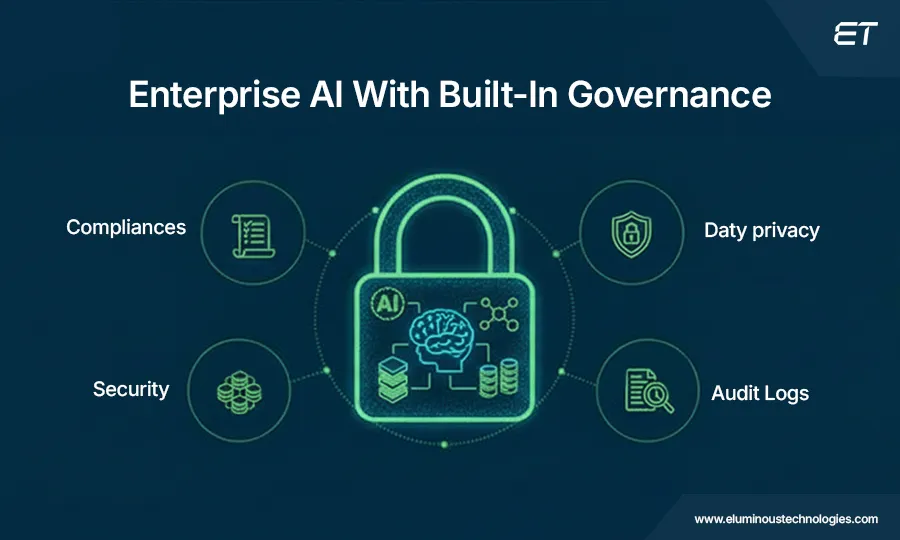
One of the biggest concerns CTOs have about generative AI is data exposure.
ServiceNow addresses this through the ServiceNow Generative AI Controller, which manages how prompts interact with AI models while keeping enterprise data within controlled boundaries.
So, your teams can stop worrying too much about governance, compliance, or security standards. Having said that, we still believe it’s vital to maintain clear log audits and to check whether everything aligns with software compliance.
Real-World Use Cases of ServiceNow GenAI
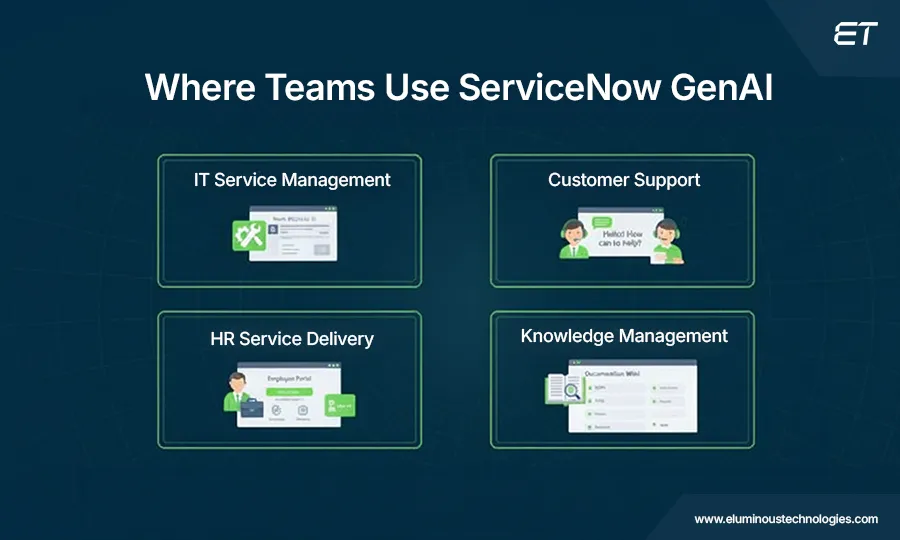
By now, the natural question most CTOs ask us is simple: Where does this actually make a difference inside the organization?
In our experience, this tech delivers the most value when it impacts your workflows. We’re talking about the ones that generate a lot of repetitive communication, documentation, or support tasks.
Here are a few areas where we see a lot of potential.
IT Service Management (ITSM)
IT teams deal with a constant flow of incidents, service requests, and troubleshooting tasks. With Now Assist, GenAI can summarize incidents, suggest resolutions based on historical tickets, and even draft responses to users.
For example, when an engineer resolves a complex incident, GenAI can automatically generate a knowledge article from the resolution steps. Over time, this builds a richer knowledge base without adding extra work for the IT team.
Customer Support and Service Operations
Customer support teams spend a lot of time writing responses, documenting cases, and switching between systems.
ServiceNow GenAI helps agents generate draft responses to customer queries, summarize long case histories, and quickly surface relevant knowledge articles. That means faster response times and more consistent communication with customers.
It also reduces the cognitive load on support agents who are handling dozens of cases every day.
HR Service Delivery
HR teams handle a steady stream of employee questions ranging from benefits inquiries to policy clarifications.
GenAI can automatically generate responses to common employee questions and recommend relevant HR knowledge articles. Instead of HR teams answering the same questions repeatedly, employees can receive accurate responses much faster.
This allows HR professionals to focus more on strategic initiatives instead of routine queries.
Knowledge Management
One of the most underrated benefits of ServiceNow GenAI is how it improves knowledge creation.
Teams often skip documentation because writing knowledge articles takes time. With GenAI, you can generate those articles automatically from resolved incidents, customer cases, or internal updates.
Over time, this creates a self-improving knowledge base that helps teams solve problems faster. That’s a nice addition when you need less marketing impact but more technical utility.
Wrapping Up
Generative AI is showing up in almost every enterprise conversation right now. But the real question is how quickly it can add value, not just end up as another fancy digital tool.
That’s where ServiceNow GenAI stands out.
Because it’s built directly into the Now Platform, it doesn’t require teams to adopt yet another tool or change the way they work. Instead, it quietly enhances the processes already running across IT, HR, customer service, and other business functions.
From drafting responses and summarizing cases to accelerating workflow design, GenAI helps teams move faster while reducing the manual effort that slows them down.
If you’re thinking about bringing GenAI into your ServiceNow environment and want a smoother rollout, it might be worth talking to a trusted ServiceNow implementation partner. Our team is always happy to explore what that could look like for your workflows.
Curious what ServiceNow GenAI could automate in your workflows? Let’s map out a few real use cases together.
Frequently Asked Questions
1. What is ServiceNow GenAI?
ServiceNow GenAI is the generative AI capability built into the Now Platform. It helps teams automate tasks like drafting responses, summarizing incidents, generating knowledge articles, and assisting with workflow creation. The AI works directly within ServiceNow workflows, making outputs more relevant to enterprise operations.
2. How does ServiceNow GenAI work?
It works by combining LLMs with enterprise workflow data inside the Now Platform. Tools like Now Assist analyze tickets, requests, and knowledge articles to generate responses, summaries, and recommendations based on relevant context.
3. What are the main features of ServiceNow GenAI?
Key features of ServiceNow GenAI include AI-powered content generation, incident and case summarization, automated knowledge article creation, workflow suggestions, and intelligent search.
4. Which teams benefit most from ServiceNow GenAI?
ServiceNow GenAI is most valuable for teams that handle large volumes of requests and documentation. IT service management, customer support, HR service delivery, and operations teams benefit the most because it can summarize cases, draft responses, and generate knowledge articles.


ServiceNow Adaptive Implementation Framework (SAIF): A Complete Guide
When you invest in major enterprise platforms, implementation risks are quite common. The larger your company, the greater is the…

ServiceNow AI Control Tower: Is it Relevant for Your Business?
AI is everywhere. It’s in your customer service, operations, and across all departments. Is this good or bad? Maybe both.…


