
 Book a Meeting
Future of Web Application Development: What to Expect in 2026 & Beyond?
Since the beginning of the digital revolution, every company has eventually broken the code and discovered how to multiply its revenues. They found that web application development is the key to quick, sustained success.
Web app development, which covers web design, web programming, database management, and online publishing, is the process of building and managing websites.
Every company now understands the potential of digital solutions to draw in new clients while retaining existing ones. We also cannot ignore that the world of website building is constantly changing, making it difficult for some firms to thrive in the current digital era.
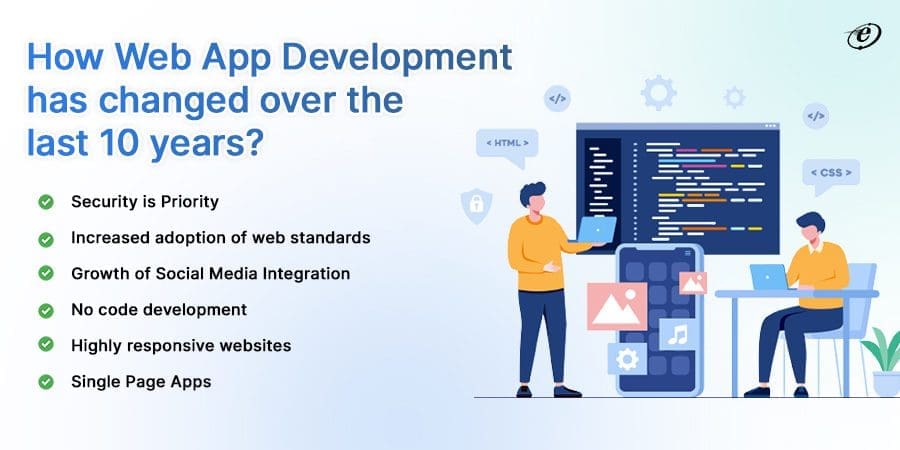
To remain competitive, firms must keep up with the latest web development trends. And you need a robust web offering to strengthen your position in this cutthroat digital market. We also can’t ignore the selection of the right web app development company with extensive knowledge of the latest technology; this is essential.
Today, businesses need websites that stand out to compete in this fiercely competitive market. These websites can only be created using cutting-edge technologies that are unique today.
Customizing your website to meet your business and user needs with the help of a leading custom web application development company will also ensure the success of your application.
Are you also looking for answers to the following questions-
- What will be the future of web application development?
- How will web app development services redefine success?
- Will the tech stack and methodology you are using stay relevant in the future?
Pursue this write-up until the end to get answers to all the questions.
Due to the quick evolution of these web app development services, businesses also require a current knowledge base and top-notch frameworks. Moreover, it is crucial to identify the web development trends that best suit your company. As a result, we have compiled a list of future web development trends by evaluating market demands in numerous IT industries that will help you know the future of web app development in 2026 or beyond.
Don’t get left behind in the web3 revolution! Reach out now and shape the future with us.
Future Trends of Web Application Development
Businesses will be more successful at attracting and converting visitors by implementing the latest web development technologies. We will cover the most well-liked technology trend in web development that will give you a competitive edge over competitors.
Many of these trends may already be present online, but they will most likely spread widely in the future. Here are the 12 most popular web development trends for 2026.
1. Decentralized Identity & Zero-Knowledge Security
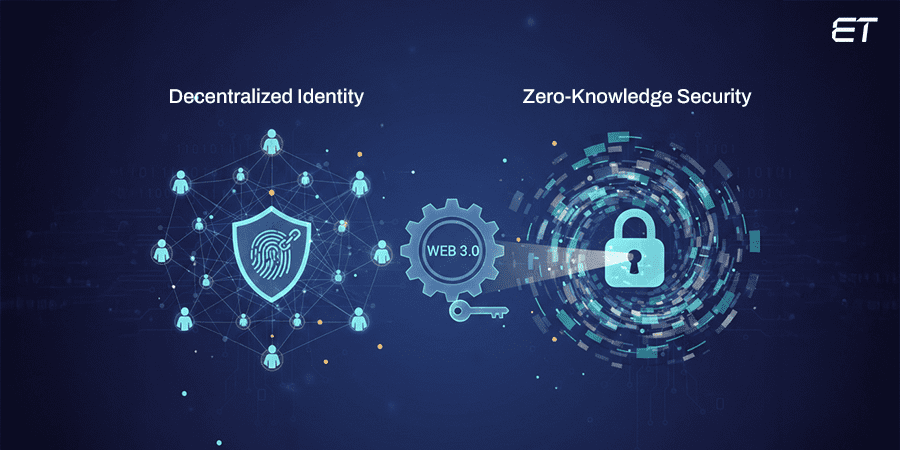
Decentralized identity (DID) and zero-knowledge technology are quietly becoming the backbone of modern web applications.
Instead of relying on traditional passwords, centralized databases, or third-party verification systems, decentralized identity allows users to control their own credentials while granting businesses verifiable, tamper-proof access to the information they need. This eliminates the need to store sensitive data inside your application.
Zero-knowledge proofs (ZKPs) further enhance this model by allowing applications to validate information without ever seeing or storing the underlying data. Imagine verifying a user’s age, location, or membership status without holding a single piece of personal information on your server. That’s where the future of secure web development is heading.
As cyber threats grow more sophisticated and global regulations tighten, businesses are naturally shifting toward solutions that guarantee privacy, transparency, and compliance.
2. The Rise of WebXR & Mixed Reality Interfaces
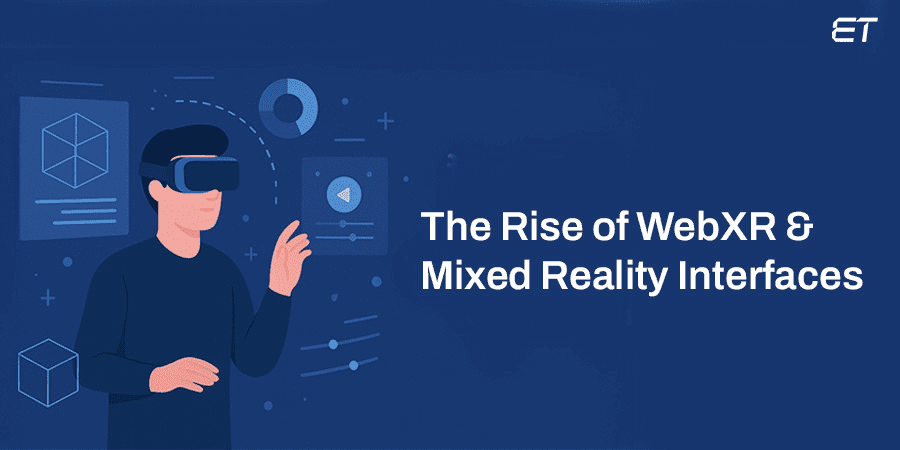
Virtual reality is no longer limited to gaming and entertainment. With the rapid evolution of WebXR and mixed reality (MR), businesses are now delivering immersive, interactive experiences directly inside the browser.
Unlike the early days of VR, when adoption was slow and use cases were limited, WebXR empowers developers to build environments that seamlessly blend the physical and digital worlds. Users can explore 3D product demos, attend virtual meetings, visualize architectural models, or participate in hands-on training sessions with the ease of opening a webpage.
Mixed reality further accelerates this shift by bringing spatial interfaces into real-world contexts. Companies are already using MR for virtual product try-ons, interactive walkthroughs, remote collaboration, education, and medical simulations. As browser engines continue adding native XR support, these experiences will become faster, more realistic, and far more accessible.
3. Progressive Web Apps
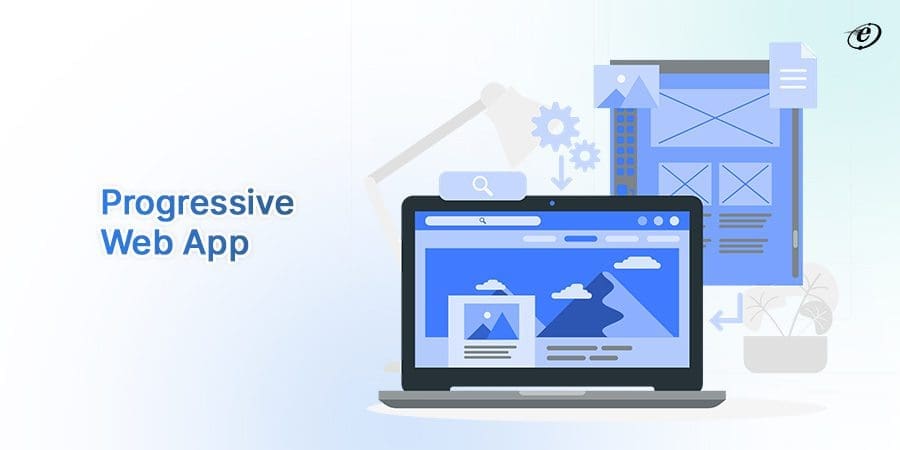
PWAs are the leading representatives of the future of web application development, recreating the app experience in the browser and making development easier by eliminating the need to create native apps for various devices. PWAs are particularly useful for adding items to customize the website, as doing so in native mobile apps is highly tedious.
Manifest files, server workers, and an application shell architecture are all features that progressive web applications (PWAs) incorporate to take advantage of the expanding mobile-first design trend. PWAs will be created in 2026 using HTML, CSS, JavaScript, React, Web Assembly, or Angular.
Progressive web apps (PWAs) are not new, but their most recent version will completely replace web apps. PWAs speed up webpage loading and enable offline functionality in apps like Google Maps. PWAs are used by businesses like Starbucks, Uber, Pinterest, and Twitter to enhance the user experience.
4. AI IN Integrating Solutions
Artificial intelligence (AI) is software that uses natural language processing methods, such as topic modeling, to perform tasks like data analysis or automatically respond to client messages. AI plays a crucial role in the digital transformation of modern business.
Artificial intelligence holds a prominent role in the potential future of web development. According to Forbes, the use of AI by marketers surged by 190% between 2018 and 2020, with many using Facebook Messenger, WhatsApp, and Skype to perform their tasks rather than traditional chatbots. In 2026, you can anticipate an even greater growth of AI chatbots.
In the future, we expect AI-enabled chatbots to become even more versatile at matching user behavior by leveraging natural language processing, machine learning, and data retrieval methods.
Chatbots are most profitable across sectors such as healthcare, education, tourism, and banking. Many top-rated Clutch dedicated developers already use AI chatbots to serve their clients.
AI-enabled chatbots help businesses perform tasks using voice or text chats more quickly while enhancing the consumer experience. An AI chatbot can be used to gather information, respond to frequently requested inquiries, and resolve various problems. Customers can now enjoy a seamless digital experience.
Unleash your business’s complete potential with AI-driven innovation. Let’s build something breathtaking!
5. Serverless Architecture
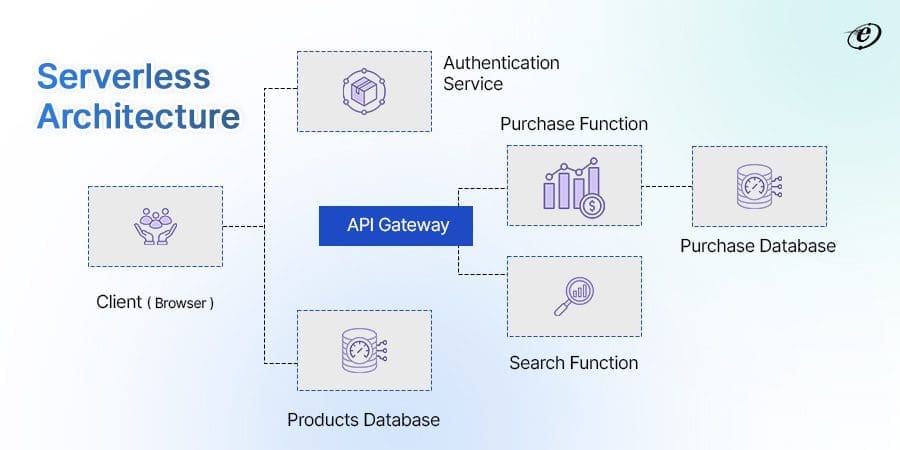
The serverless architecture industry is expected to be worth $36.84 billion by 2023. It seems that more and more businesses should enter this market in 2026 and beyond.
The cloud-based serverless architecture enables users to run code for nearly any application or backend service without administrative oversight. There is no need to provision, manage, or upgrade servers. The top firms using and offering serverless architecture are Google, Amazon, and Microsoft.
There is a rise in the adoption of cloud SaaS solutions due to the shift to work-from-home. Web development saw a significant rise in the adoption of serverless architecture.
Various companies will also use serverless functions to perform operations such as downloading file backups, sending notifications, and exporting objects. These products include chatbots, IoT apps, and APIs.
6. API-First Approach
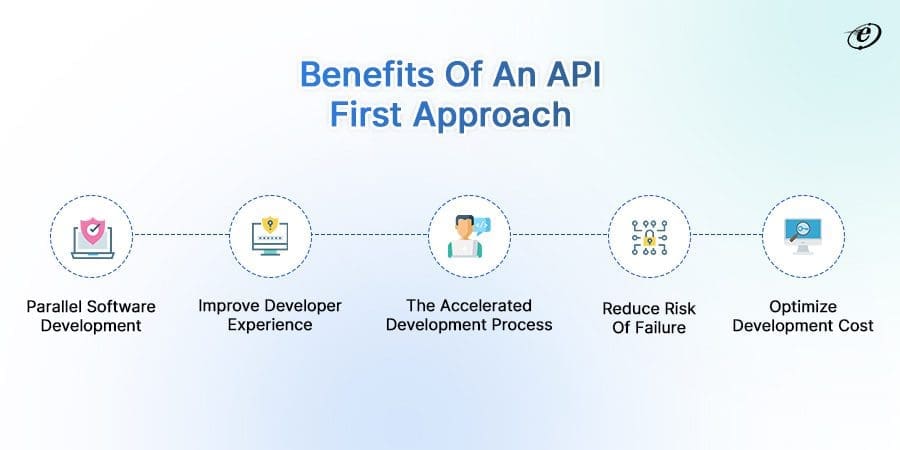
The API-first approach to development meets user needs. As visitors view a website, developers can complete their work and push the code concurrently. It speeds up delivery and reduces development costs.
The demand for APIs based on the API-first strategy that can function effectively across all devices, platforms, and operating systems is rising as applications and technologies evolve. The code-first methodology is typically replaced by developing APIs first.
It wouldn’t be incorrect to say the API-first strategy has been on the rise over the past few years. It is built on a Microservice architecture, enabling the web designer to create the API before it is used. Hundreds of thousands of developers have employed this technology to produce outstanding solutions.
Discover the power of real-time communication. Unlock instant data flow and elevate your app’s experience!
7. Quantum Computing
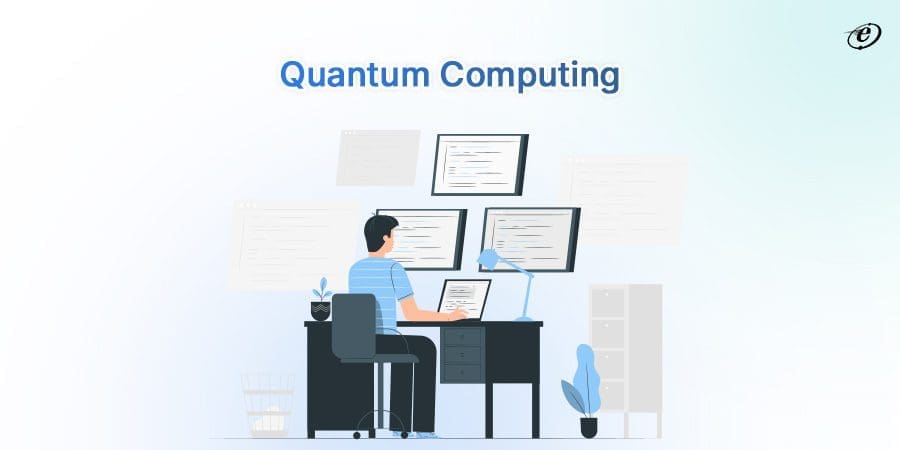
Since more and more daily activities depend on the internet, whether for banking, shopping, paying bills online, transmitting data, chatting, or other daily tasks, there is always a risk of data theft. The most effective method for data security is quantum computing.
Although quantum computing emerged in the early 1980s, it is currently one of the technologies with the fastest growth rates, as tech behemoths like IBM and AWS invest billions of dollars. This innovation will drastically alter future web app development. Quantum phenomena such as superposition and entanglement were employed in QC.
The fundamental distinction between classical computing, which we now use, and quantum computing is that the former stores information as conventional bits, which are either 0 or 1. Quantum bits, or qubits, are what quantum computing uses to store data in the form of 0, 1, or both at once.
8. Cyber Security

One of the most critical issues of 2026 is cybersecurity, which protects data, networks, and computers from attack. Every business, regardless of size, is exposed. For instance, in June 2021, hackers harvested personal data, including full names, email addresses, and phone numbers, from the accounts of 700 million LinkedIn members.
Web application development has changed in response to the concerning rise in cybercrime, making it easier to protect client and company data. Organizations want secure websites that can stop cyber threats such as data breaches, phishing, denial-of-service attacks, and SQL injection attacks to ensure their operations run smoothly and without interruption.
Beyond monitoring tools and analytics checks, non-traditional approaches to enhancing cybersecurity will continue to grow. Custom web application development emphasizes the value of both human and automated monitoring.
9. WebAssembly (WASM) & AI-Powered Web Performance
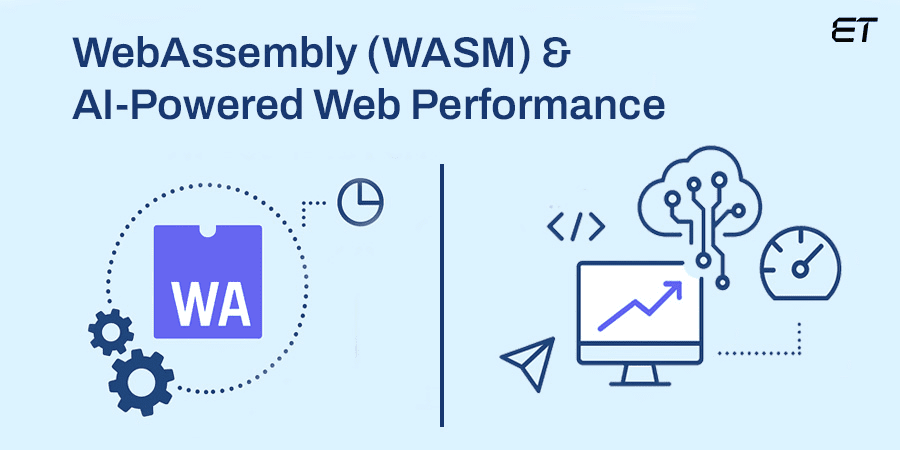
WebAssembly (WASM) is rapidly becoming one of the driving forces behind next-generation web applications. As businesses demand lightning-fast performance, advanced computation, and AI-driven experiences inside the browser, WASM delivers a level of speed and capability that traditional JavaScript alone simply cannot match.
With WebAssembly, developers can run high-performance languages like Rust, C++, Go, and Python directly in the browser, enabling applications that once required heavy desktop installations to run smoothly on the web. From 3D editing tools and real-time collaboration platforms to simulation dashboards and enterprise-grade AI utilities, WASM empowers businesses to build solutions that are more responsive, scalable, and future-ready.
One of the most impactful shifts is the rise of client-side AI inference. Modern web applications can now execute AI models locally through WASM, reducing server costs while improving privacy and load times. This means faster recommendations, instant content generation, and a seamless user experience, even with resource-intensive tasks.
Enterprises in finance, healthcare, design, engineering, and education are already integrating WebAssembly to deliver feature-rich products that operate efficiently across devices and platforms. As demand for high-performance digital experiences continues to grow, WASM will play a central role in shaping the future of web application development in 2026 and beyond.
How Web Application Development Helps Grow Your Business?
The web application development, with the help of professional digital transformation experts, can create an online presence, raise awareness of the goods and services you provide, show people how they can use those goods and services to solve their issues, and explain why they are superior to those of your rivals. Simply said, effective web app development enables you to:
- Increase your audience’s awareness of you, drive more people to your website, and strengthen your relationship with them.
- Build trust and confidence among customers about your brand by demonstrating to potential customers that you are serious about your business.
- Deliver the appropriate message to your target audience and current clients with pertinent, helpful, and updated information.
- Provide helpful content to your visitors and address their concerns, complaints, and ideas in a timely manner to effectively communicate with them.
- Have websites that are successfully optimized to draw organic search engine traffic and increase the likelihood that visitors will convert
We hope this article has given you a snapshot of the web app development trends that will likely continue to dominate the internet landscape. If you are looking for renowned web application development services, eLuminous Technologies is the best choice; explore how!
Imagine the possibilities with us. Ready to make it happen? Let’s discuss your next big move.

Choosing a Software Development Partner: A Practical Evaluation Framework
You’ve started shortlisting multiple vendors, and suddenly, every option looks the same. Polished portfolios, bold claims, similar tech stacks. It’s…

Staff Augmentation Best Practices for High-Performance Teams
Do you have a clear vision, but lack the bandwidth or skills to execute fast enough? Then it might not…


