
 Book a Meeting
What is ServiceNow Software Asset Management (SAM), and Why Should You Use it?
- Learn how ServiceNow Software Asset Management (SAM) helps you gain better visibility into your software assets and license usage.
- Understand how SAM can help you reduce software costs, improve compliance, and simplify license management.
- Explore the key features, implementation best practices, and common challenges to consider before adopting ServiceNow SAM.
- Discover when ServiceNow SAM delivers the most value and how it fits into your broader IT asset management strategy.
If you’ve ever tried tracking software licenses using emails (and a bit of institutional memory), you already know how quickly things can spiral.
Before long, you’re asking questions like, “Who owns this license?”, “Are we paying for software no one uses?”, or “Didn’t we already renew this subscription?”
Suddenly, your software inventory starts to feel more like a treasure hunt than an asset register.
As organizations adopt more SaaS applications, keeping software assets organized becomes difficult. Without a centralized approach, it’s easy to overspend on unused licenses or face compliance challenges during vendor audits.
This is where ServiceNow Software Asset Management (SAM) comes in. Built on the ServiceNow platform, SAM helps you manage software assets throughout their lifecycle by bringing together license information, software usage, entitlement data, and compliance insights in a single place.
However, to get the most value from it, you need to understand its core capabilities and where it fits within your IT asset management strategy. In this blog, you’ll learn how ServiceNow SAM works and the common challenges to watch out for before getting started.
What Is ServiceNow Software Asset Management?
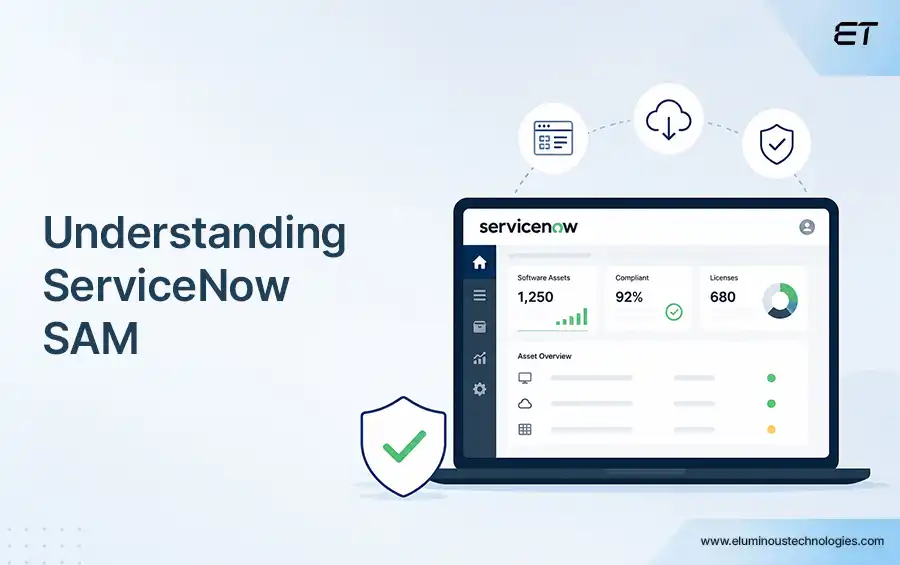
You might be using dozens or even hundreds of software applications. (Don’t worry, we won’t judge you). Keeping track of them does become a hassle.
Your management purchases new licenses, employees join and leave, subscriptions renew automatically, and you deploy applications across different teams. Now, answering a few seemingly simple questions becomes difficult:
- What software do you actually own?
- Which applications are your teams actively using?
- Are you paying for licenses you no longer need?
This is exactly what ServiceNow Software Asset Management (SAM) is designed to help you solve.
Built on the ServiceNow platform, SAM helps you manage software assets throughout their lifecycle. It combines software discovery, license entitlement data, usage information, and compliance insights into a centralized system.
Some of the key capabilities of ServiceNow SAM include:
- License reconciliation: Compare software installations with purchased license entitlements to help identify compliance risks and licensing gaps.
- Software discovery: Gain visibility into the software installed across your IT environment.
- Software reclamation: Identify unused or underutilized software so that licenses can be reassigned rather than purchasing new ones.
- Renewal insights: Understand software usage and entitlement data before negotiating renewals with vendors.
- Usage metering: Track application usage to help identify shelfware and optimize software spending.
For IT leaders, procurement teams, and software asset managers, this level of visibility reduces unnecessary software costs and simplifies compliance management. And perhaps, it means fewer surprises when a software vendor comes knocking with an audit request.
Why Should Your Leadership Team Care About ServiceNow SAM?
Whether you’re supporting employees, serving customers, or running critical operations, your organization depends on software every day. The challenge is that as your application portfolio grows, so does the difficulty of organizing it.
That’s why ServiceNow Software Asset Management (SAM) gives your leadership team better visibility so they can make the best decisions. Here are a few reasons to consider using SAM.
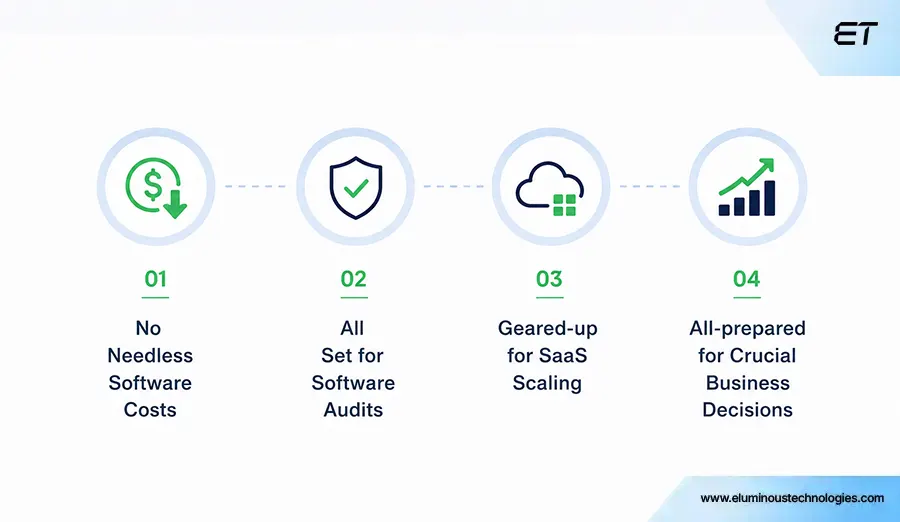
1. Reduce Unnecessary Software Spending
It’s surprisingly easy to end up paying for software that nobody uses.
One department purchases a collaboration tool, another signs up for something similar, and before long you’re paying for overlapping applications without realizing it. Throw in automatic renewals, and the situation becomes more expensive.
ServiceNow SAM helps you bring those hidden costs to the surface by helping you:
- Identify unused or underutilized software licenses before renewal.
- Reallocate existing licenses instead of purchasing new ones.
● Spot duplicate software purchases across departments.
● Use software usage data to support vendor negotiations.
Rather than relying on assumptions, you can make licensing decisions backed by real usage data.
2. Stay Prepared for Software Audits
Let’s be honest. Software vendor audits rarely arrive with perfect timing. They show up when your team is already juggling upgrades, projects, and deadlines.
Without accurate license records, gathering the information for an audit can become a time-consuming exercise.
ServiceNow SAM helps you stay prepared by:
- Monitoring software license compliance on an ongoing basis.
- Maintaining up-to-date entitlement and installation information.
- Providing the records to support internal reviews and vendor audits.
Instead of scrambling when an audit begins, you’ll already have much of the information organized and readily available.
3. Bring Order to SaaS Growth
Cloud applications have made it easier than ever for teams to adopt new software. Unfortunately, they’ve also made it easier to forget about it.
A department signs up for a project management tool. Another team chooses a different one. Someone starts a free trial that quietly turns into a paid subscription. Before you know it, your finance team is wondering why three different apps are solving the same problem.
Sounds familiar?
ServiceNow SAM gives you greater visibility into software usage, subscription renewals, and licensing information so you can:
- Identify redundant applications.
- Review software utilization before renewing subscriptions.
- Consolidate overlapping tools where appropriate.
- Improve governance across your software portfolio.
The goal: Ensure each app continues to deliver value.
4. Support Better Business Decisions
Software asset data becomes valuable as your organization grows.
Whether you’re planning a digital transformation initiative, evaluating new technology investments, or preparing for a merger or acquisition, understanding your software estate helps you make better decisions.
With accurate software inventory, license, and usage information, your leadership team can:
- Forecast software spending more effectively.
- Identify opportunities to optimize software investments.
- Reduce licensing risks before major business initiatives.
- Make the right call using current, reliable data instead of estimates.
Remember: good decisions depend on good information. ServiceNow SAM helps provide that foundation by giving you a clearer picture of how software is being used across your organization.
How Does ServiceNow Software Asset Management Work?
By now, you know what ServiceNow Software Asset Management (SAM) does and why organizations invest in it. But how does it turn scattered software data into actionable insights?
Think of it as a continuous cycle.
ServiceNow SAM discovers what’s installed, compares that information with your license entitlements, and helps you take action based on the results.
Here’s a simplified view of how the process works:
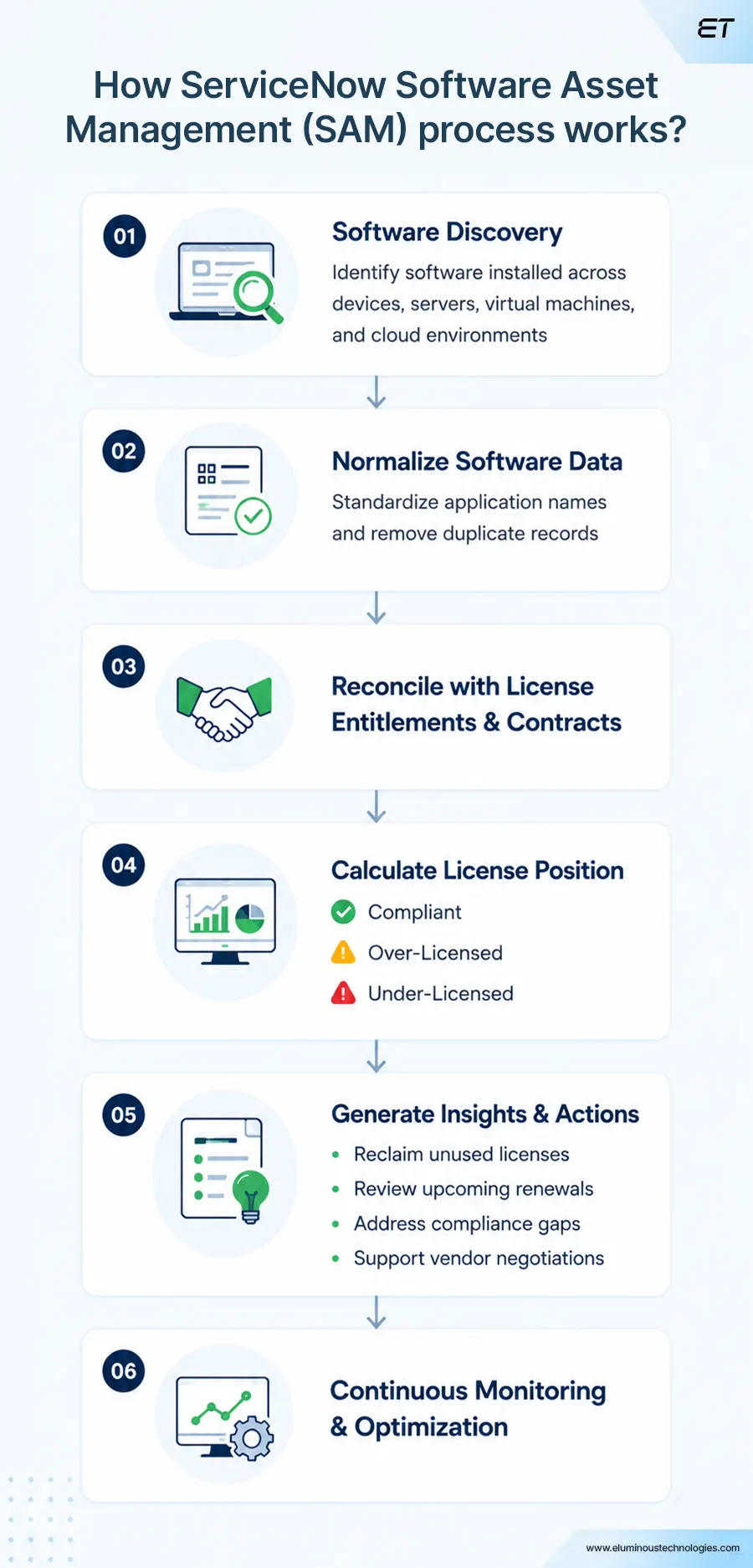
Let’s briefly look at each stage.
1. Discover Your Software Assets
ServiceNow SAM gathers software inventory data from across your environment using discovery capabilities and integrations. This helps you build a centralized inventory of the software installed across devices, servers, virtual machines, and cloud environments.
2. Normalize the Data
Different systems often identify the same software in different ways. ServiceNow SAM standardizes software names and publishers, helping eliminate duplicate records and creating a cleaner, more reliable inventory for license management.
3. Compare Software Usage with License Entitlements
The platform then reconciles discovered software with your procurement records, contracts, and license entitlements. This gives you a clearer understanding of your current license position and helps identify where you may be over-licensed, under-licensed, or operating within your entitlement limits.
4. Turn Insights into Action
Once your software inventory and license data are aligned, you can identify opportunities to optimize your software estate. For example, you might reclaim unused licenses, prepare for upcoming renewals, investigate compliance risks, or use software usage data to support vendor negotiations.
Because ServiceNow SAM operates on the ServiceNow platform, these activities can also integrate with your existing IT service management and operational workflows, reducing the need to manage disconnected tools.
Why Do Organizations Struggle to Manage Software Assets?
Managing software sounds simple until you realize:
- Your finance team says you own 250 licenses
- IT reports 400 installations
- Procurement has three different renewal dates
- An employee is still using a premium license despite leaving six months ago.
Hypothetical, of course. But if that sounds even a bit familiar, you’re not alone.
The table below highlights some of the most common challenges you can face and why they become the catalyst for adopting ServiceNow Software Asset Management (SAM).
| Challenge | Why It Happens | Business Impact |
| Decentralized software purchasing | Different departments purchase software independently, without a centralized approval. | Duplicate applications, unnecessary software spending, inconsistent governance, and limited visibility across the organization. |
| Limited visibility into software assets | Software inventory, procurement records, and license information lie across multiple systems. | Difficult renewal planning, inaccurate budgeting, and uncertainty around actual software usage. |
| Software license compliance | Manually tracking installations against purchased licenses becomes difficult. | Greater audit preparation effort, increased compliance risk, and unexpected licensing costs if you don’t identify gaps. |
| Rapid SaaS adoption | Teams can quickly subscribe to cloud applications, making it harder for IT to maintain an accurate inventory of active software. | Subscriptions skyrocket, tools overlap, renewals are forgotten, and control over software spending is reduced. |
| Manual software management | Software data is maintained using emails and disconnected management tools. | Time-consuming administrative work, inconsistent records, and slower decision-making during renewal reviews. |
The Bottom Line
Managing software is about knowing where your software budget is going, whether your teams are using the right tools, and identifying opportunities to optimize costs without impacting productivity.
As your software environment grows, manually managing licenses, renewals, and software usage becomes difficult. After a certain point, spreadsheets start developing personalities of their own, and that’s a sign it’s time for a better approach.
ServiceNow Software Asset Management (SAM) helps you replace scattered information with a centralized view of your software estate. You get the insights to make more informed decisions about licensing, budgeting, and compliance.
If you’re evaluating how to improve software asset management, working with an experienced ServiceNow consulting company can prove useful. A specialized vendor can assess your current processes and ensure your investment delivers long-term value.
Reduce Software Costs with Smarter License Management.

AI Agent Development Cost: Pricing & Cost Drivers
Summary: AI agent development costs vary widely between projects that look similar in stages, scope, or integrations. A focused proof…

ServiceNow Governance Framework: A Guide to Consistent Multi-Team Workflows
Summary: Different teams using ServiceNow have unique priorities, but they compete on a shared ServiceNow platform. Such a conflict can…


