
 Book a Meeting
Staff Augmentation Best Practices for High-Performance Teams


Do you have a clear vision, but lack the bandwidth or skills to execute fast enough? Then it might not be a roadmap problem, but rather an execution issue.
Most leaders today are not struggling with ideas or budget. They’re facing a lag in execution speed. Even with everything aligned, projects still miss deadlines.
The reason is often simpler. Internal teams are stretched, and critical skill gaps slow progress.
This is where staff augmentation becomes strategic. By 2026, the outsourcing market is expected to reach USD 634.18 billion, reflecting its growing adoption. So, integrating skilled professionals in your team can help speed-up delivery, fill critical gaps, and scale exponentially.
This blog covers 10 proven staff augmentation best practices, explaining their meaning and significance. We’ll also explain how these staff augmentation best practices can be implemented in real time.
10 Proven Staff Augmentation Best Practices
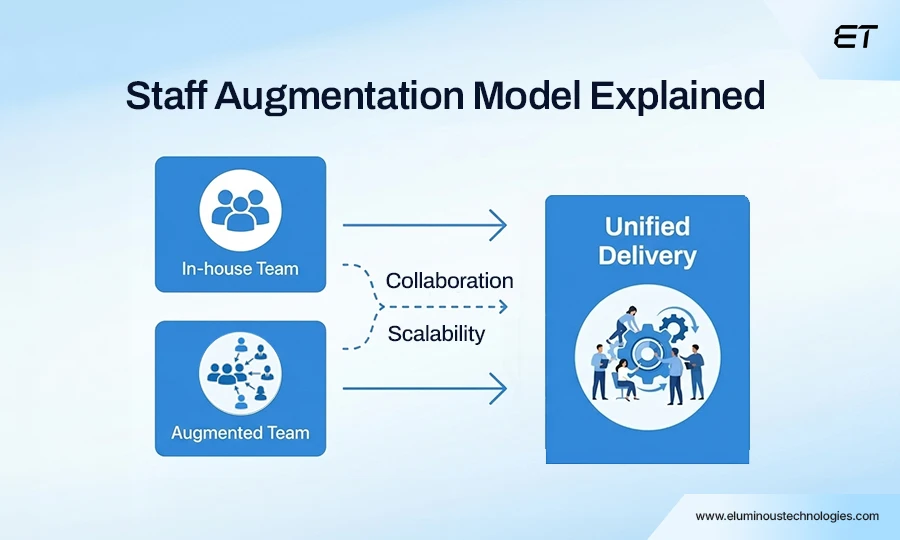
Best practices for integrating augmented IT staff with in-house teams can be a wise move to scale your deliverables. Unlike traditional outsourcing models, staff augmentation allows external engineers to work directly within your system and workflow. To successfully onboard such talent, this model needs a clear structure.
Staff augmentation best practices ensure alignment, faster onboarding, and consistent delivery. Let’s dive straight into these best practices in staff augmentation.
1. Define Project Scope and Timelines
As part of effective staff augmentation best practices, A well-defined scope and timeline help you clearly outline your objectives. Identifying KPIs, outcomes, and required skills early ensures a strong foundation for execution.
Without a well-defined scope, projects can lose direction, leading to misaligned goals and delayed deliveries.
This results in budget overruns and missing opportunities for your business.
Clear goals ensure that every addition to the team aligns with project requirements and skill sets, keeping execution on track.
How to implement?
Start by defining key project details like:
- Goals
- KPIs
- Required skills
- Timelines
You can use frameworks like Agile or Scrum to structure and track these requisites. Once finalized, share this with your staff augmentation partner to ensure alignment and avoid mismatched talent.
2. Conduct a Skills Gap Analysis
Hiring becomes inefficient when you’re unclear about missing skills. The result? Wasted budget and delayed delivery.
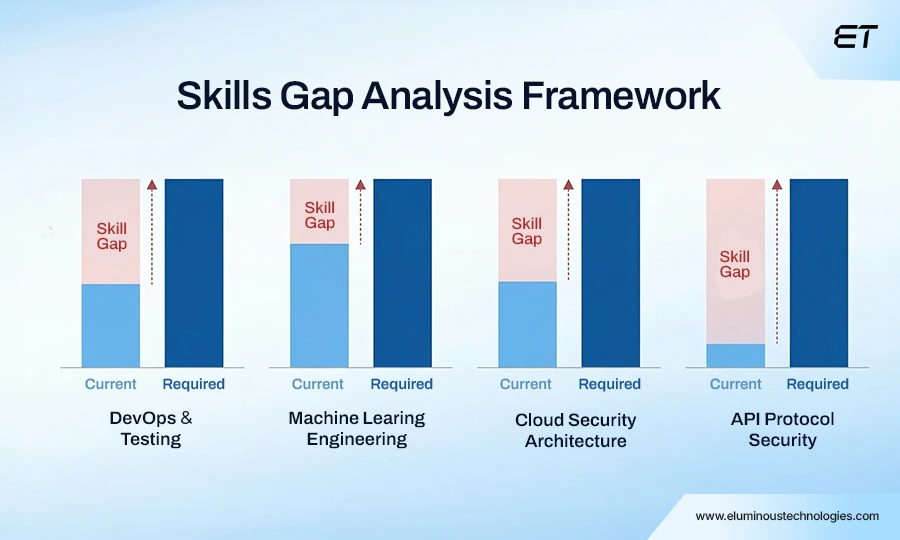
One of the core staff augmentation best practices is conducting a skill gap analysis helps you gauge the exact expertise to meet your project goals.
Without clarity on required skills, you can face inefficiencies, missed deadlines, and increased costs. Assessing project needs and defining required competencies early helps avoid these issues.
How to implement?
Start by auditing your current team capabilities. Know:
- Existing roles
- Current contributions
- Project requirements
Collaborate with department heads to validate skill gaps and prioritize critical roles. Document these findings to create a roadmap for your vendor and prevent misaligned staffing.
3. Establish Clear Expectations
Establishing clear expectations involves defining responsibilities, delivery structures, and performance metrics for your team. This helps reduce confusion and ensures the right information reaches the right stakeholders.
Without clear expectations, there’s a chance of misaligned hiring and duplicated efforts. Clear communication from leadership helps keep teams aligned and focused on outcomes.
How to Implement?
Start by documenting key project elements like:
- Roles
- Deliverables
- Tasks
- Reporting structures
- Communication channels
- Performance metrics
- Expected outcomes
Align this document with both the in-house and augmented teams to ensure everyone is on the same page. Regular reviews help prevent misunderstandings and allow teams to adapt as the project evolves. Speaking of aligning two disparate team models, we believe our comparison on staff augmentation vs in-house recruitment can be a worthy read for you.
4. Choose the Right Augmentation Partner
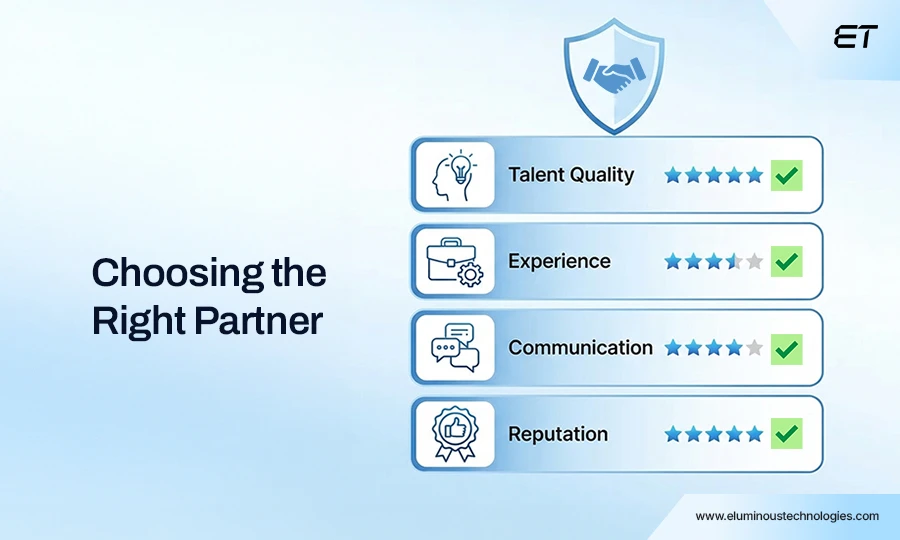
Choosing the right augmentation partner is one of the most critical staff augmentation best practices, as it directly impacts project success. The right vendor ensures access to skilled professionals who align with your technical and business objectives.
Creating an evaluation checklist helps set clear expectations from the start. Include factors like talent quality, industry experience, reputation, and communication fit to ensure smoother collaboration.
How to implement?
Clearly define your requirements and ensure they align with your project goals. Share detailed project expectations so the vendor fully understands your needs. Validate their experience in your industry and review credibility through platforms like Clutch and TechBehemoth.
5. Document the Process
Document the entire project lifecycle by centralizing workflows, onboarding processes, technical requirements, and operational guidelines.
Proper documentation reduces dependency on individuals and ensures continuity. Keeping information centralized improves communication and helps teams align on expected outcomes. Since team members usually join or leave projects, lack of documentation can lead to knowledge gaps and delays.
How to Implement?
Create standardized documentation for all key processes and workflows.
Ensure all procedures, from onboarding to execution workflows have clear and accessible documents. You can use project management tools to track progress and maintain regular updates. Lastly, ensure your in-house team and augmented teams actively contribute to and maintain documentation.
6. Integrate Augmented Teams Effectively
Effective integration ensures augmented teams align with internal workflows, tools, and culture. That’s why you need a structured onboarding process.
With clear onboarding, expectations are set early, reducing misalignment and delays. Such staff augmentation best practices ensure the extended team starts contributing from day one.
How to Implement?
Centralize access to tools, documentation, and communication channels for both in-house and augmented teams. Ensure all teams have access to the same information and systems. For the best results, you can conduct structured onboarding sessions covering tools, workflows, and project objectives.
7. Establish Strong Governance and Leadership
With distributed and hybrid teams becoming common, you need strong governance to maintain close alignment.
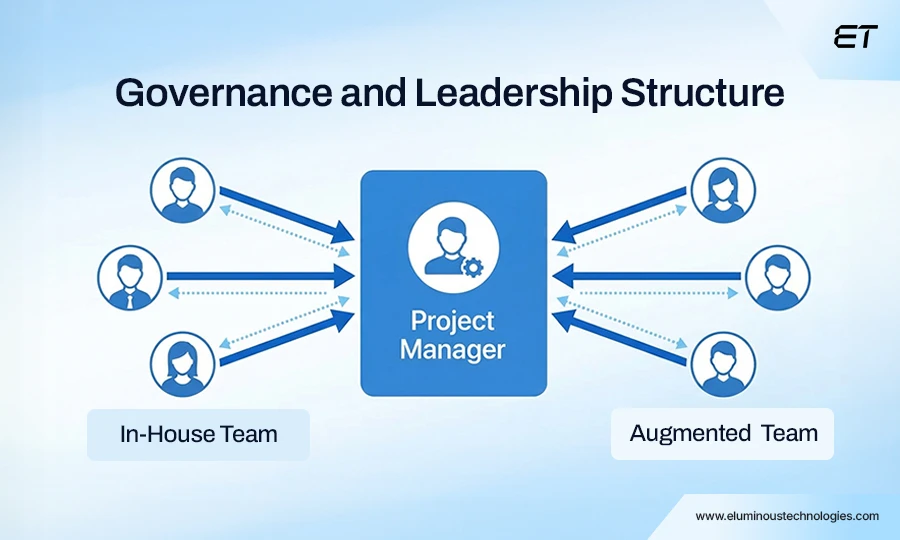
Without clear governance, teams can become disorganized, leading to misaligned goals and missed deadlines. Leadership plays a key role here in structuring workflows, maintaining communication, and ensuring accountability.
How to Implement?
Assign dedicated project managers or team leads to oversee both in-house and augmented teams. This ensures regular performance tracking and alignment with organizational objectives.
Define ownership for assigned tasks. For example, establish who’s responsible for approvals. Bring in regular checkpoints for weekly reviews and tracking progress on KPIs. You can create a single point of contact for better communication between teams to minimize delays.
8. Invest in the Right Technology
Distributed teams work across different locations, making technology necessary for effective collaboration. The right tools help streamline communication and manage tasks efficiently.
In hybrid and augmented team setups, technology becomes the backbone of communication, enabling collaboration and transparency across teams.
How to Implement?
Managing teams across time zones needs centralized communication and collaboration. Use tools like Jira, Slack, or similar platforms to centralize information, track tasks, and manage workflows.
Ensure all teams follow the same tools and workflows to avoid fragmentation and miscommunication. We have compiled the top tools for collaboration in a guide to help you make the right choice.
9. Maintain Consistent Communication
One of the biggest challenges in hybrid and augmented teams is misaligned communication. So, establishing structured communication ensures everyone stays aligned with the same information and priorities.
Clear visibility into project goals, deadlines, and expectations helps teams perform more effectively. It also improves task tracking, enables regular feedback, and clarifies ownership.
How to Implement?
Schedule regular stand-ups, weekly reviews, and monthly strategy meetings to keep teams aligned. You can also use dashboards and reports to provide transparent updates, track progress, and keep priorities aligned across teams.
We suggest defining clear communication ownership and escalation paths. This way, you avoid delays and any potential confusion.
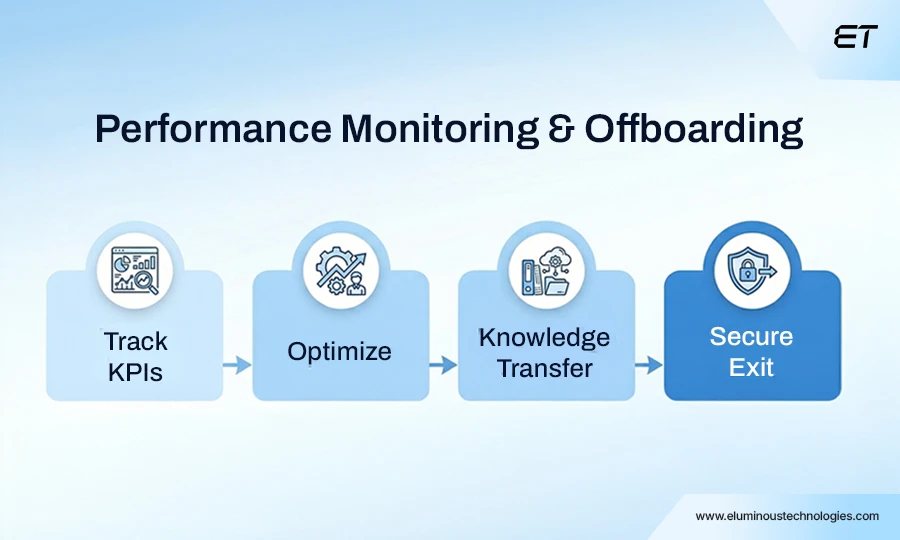
10. Monitor Performance and Plan Offboarding
Tracking team performance and keeping it aligned with project goals is vital for achieving expected results. Performance monitoring ensures alignment, while structured offboarding helps retain knowledge and maintain continuity.
Monitoring performance helps spot inefficiencies and areas for improvement. On the other hand, structured offboarding prevents knowledge loss and supports future projects.
How to Implement?
Track KPIs and performance metrics regularly to measure progress and identify improvement areas. Review progress against timelines and adjust as needed to stay on track.
Don’t forget to plan structured onboarding be ensuring:
- Proper documentation
- Knowledge transfer
- Data security compliance
Finally, revoke system access and conduct handovers to ensure a smooth transition without disrupting your operations.
Wrapping Up
Implementing the best practices for staff augmentation comes down to clarity, alignment, and execution. Defining goals, integrating teams properly, and maintaining strong communication ensures consistent delivery and reduces risks. Staff augmentation has proved to be crucial for building dynamic teams and timely delivery.
Choosing the right vendor and following best practices in staff augmentation can lead to driving your business to new heights.
Want to turn your augmented talent into a true extension of your in-house team? Schedule your strategy call to integrate the best practices.
Curious what ServiceNow GenAI could automate in your workflows? Let’s map out a few real use cases together.


Staff Augmentation Pricing Models Before and After AI
How do we link pricing to business outcomes, not just billable hours? The answer to this question has notably changed…

The Top IT Staffing Agencies: What Every C-Level Leader Should Know
Finding the right IT staffing agencies has become a strategic necessity for tech leaders. The reasons? Shrinking talent pools, rising…


