
 Book a Meeting
What Are IoT Medical Devices? Benefits, Types, and Integration Explained



Imagine investing in advanced medical devices only to discover that they can’t seamlessly share data with your mobile app or hospital management system. The result? Inefficient workflows and delayed clinical decisions.
As healthcare becomes increasingly connected, interoperability is no longer optional. The global Internet of Medical Things (IoMT) market is projected to reach USD 658.6 billion by 2030, driven largely by the growing adoption of connected healthcare technologies.
This shift is putting IoT medical devices and medical device integration at the center of digital healthcare transformation. In this guide, we’ll explore how connected medical devices work, their real-world applications, and why seamless integration is critical to maximizing their value.
What Are IoT Medical Devices?
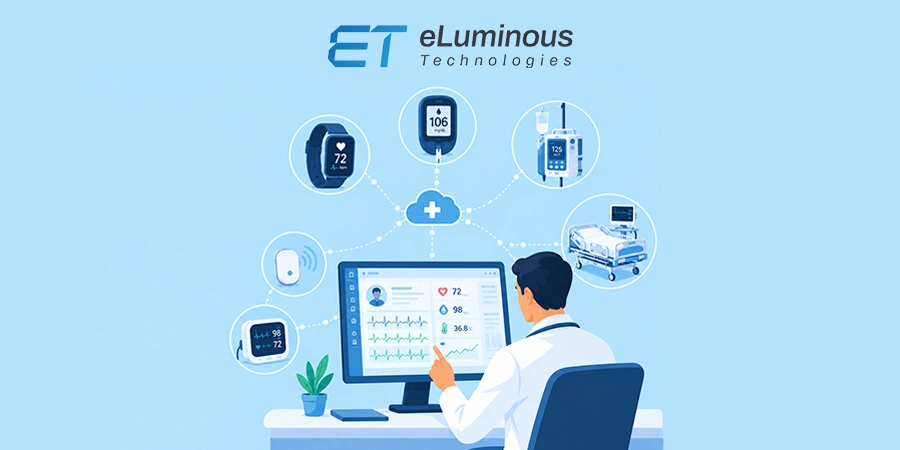
IoT medical devices are equipment with sensors, software, and internet connectivity that collect, transmit, and exchange data in real time. They can communicate with healthcare applications, cloud platforms, Electronic Health Record (EHR) systems, and other connected devices to improve patient care and operational efficiency.
Unlike traditional medical devices that operate independently, IoT-enabled gadgets share data continuously. This allows you to monitor patients remotely, automate workflows, and make faster clinical decisions.
IoT medical devices form the foundation of the Internet of Medical Things (IoMT), a connected ecosystem of healthcare technologies that facilitates seamless data exchange across the healthcare continuum. For a broader understanding of how connected technologies are transforming the healthcare industry, explore our guide on IoT in Healthcare.
Used in hospitals, clinics, and home healthcare settings, these connected devices help improve patient outcomes, expand access to care, and support data-driven healthcare delivery.
How Do IoT Medical Devices Work?
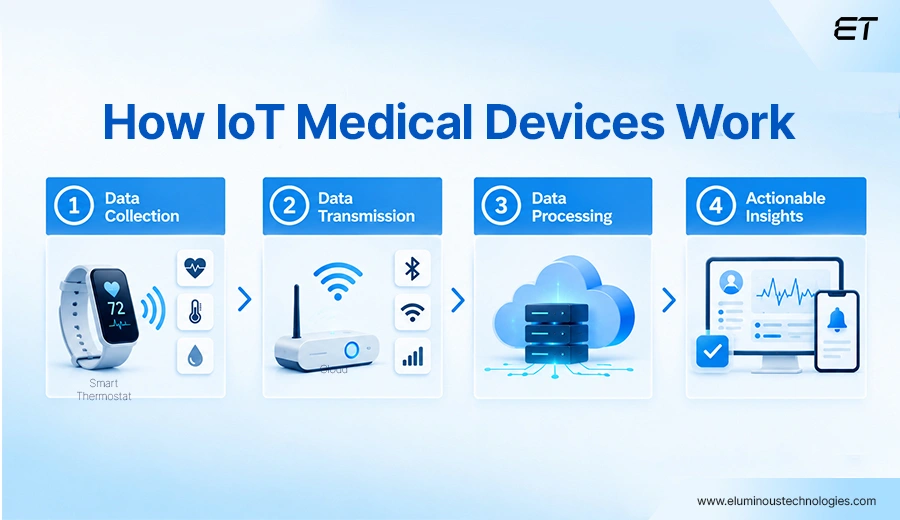
Although the functionality varies by device type, most IoT medical devices follow a similar workflow:
1. Data Collection: Sensors capture patient or equipment data, such as heart rate, glucose levels, blood pressure, or device performance metrics.
2. Data Transmission: The collected information is securely transmitted through Wi-Fi, Bluetooth, cellular networks, or other communication protocols.
3. Data Processing: Cloud platforms or healthcare applications analyze the incoming data.
4. Actionable Insights: You receive real-time insights, alerts, or recommendations to support clinical decision-making.
This continuous flow of information eliminates data silos and helps you deliver more connected, responsive care.
Types of IoT Medical Devices in Healthcare
Depending on their purpose, these connected devices can support everything from chronic disease management to hospital operations. Let’s explore some of the most common types of IoT medical devices used in healthcare today.
Wearable Health Monitoring Devices
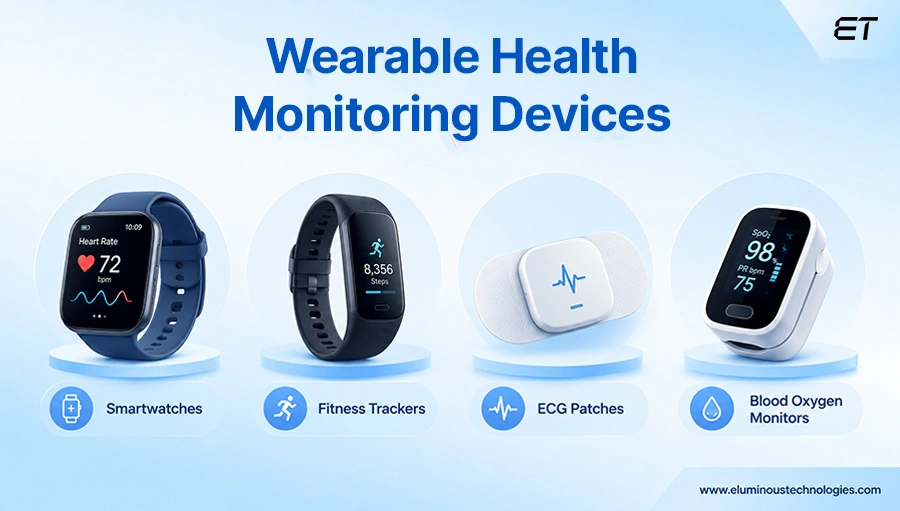
Wearable devices are among the most recognizable examples of IoT in healthcare. With sensors and wireless connectivity, these devices continuously track health metrics and send data to mobile apps or healthcare platforms.
Common examples include:
- Smartwatches
- Fitness trackers
- ECG monitoring patches
- Blood oxygen monitors
By providing continuous access to patient data, wearables help you identify potential issues early while encouraging proactive health management.
Remote Patient Monitoring (RPM) Devices
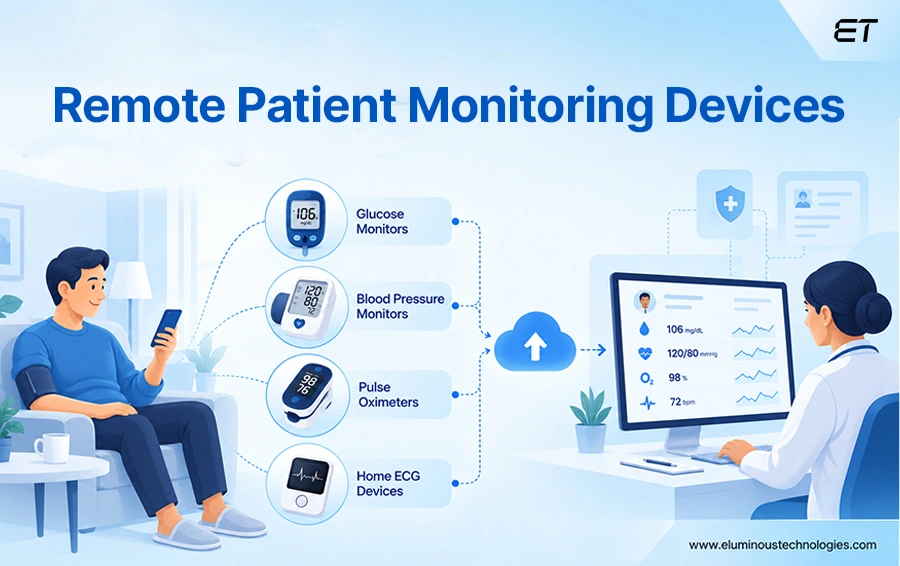
Remote patient monitoring devices allow healthcare organizations to track patients outside traditional clinical settings. These devices are particularly beneficial for managing chronic conditions and reducing unnecessary hospital visits.
Examples include:
- Connected glucose monitors
- Blood pressure monitors
- Pulse oximeters
- Home-based ECG devices
When integrated with healthcare systems, RPM devices can automatically transmit patient readings to care teams, improving response times and supporting informed clinical decision-making.
Smart Infusion Pumps
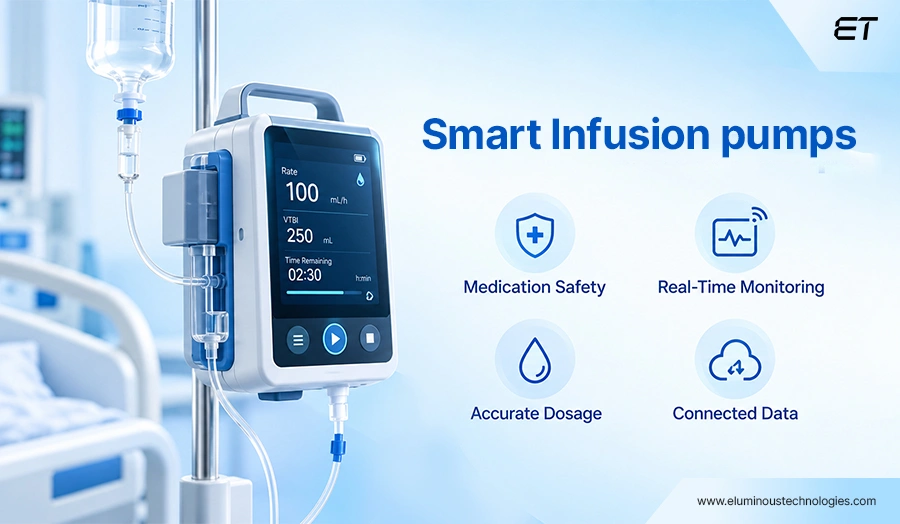
Modern infusion pumps have evolved beyond basic medication delivery systems. IoT-enabled infusion pumps can monitor dosage administration in real time, detect irregularities, and share treatment data with connected healthcare platforms.
Benefits of smart infusion pumps include:
- Improved medication safety
- Reduced manual interventions
- Better visibility into treatment workflows
- Enhanced data accuracy
Connected Imaging and Diagnostic Devices
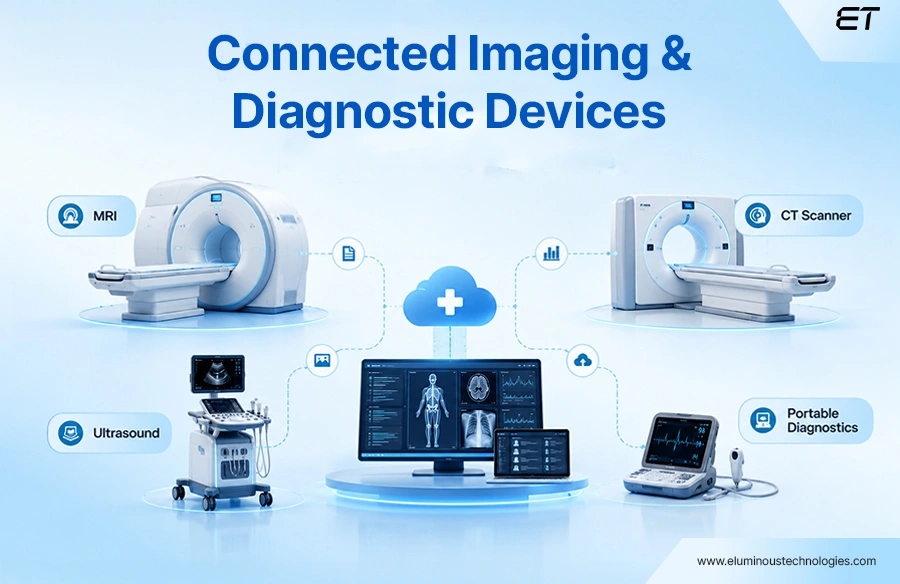
Your facilities increasingly rely on connected diagnostic equipment to improve efficiency and accessibility. These devices can securely transfer diagnostic information across departments and healthcare systems, reducing delays in care delivery.
Common examples include:
- MRI machines
- CT scanners
- Ultrasound systems
- Portable diagnostic devices
Connected diagnostics help you access critical information faster, leading to quicker diagnoses and more effective treatment plans.
Smart Hospital Equipment
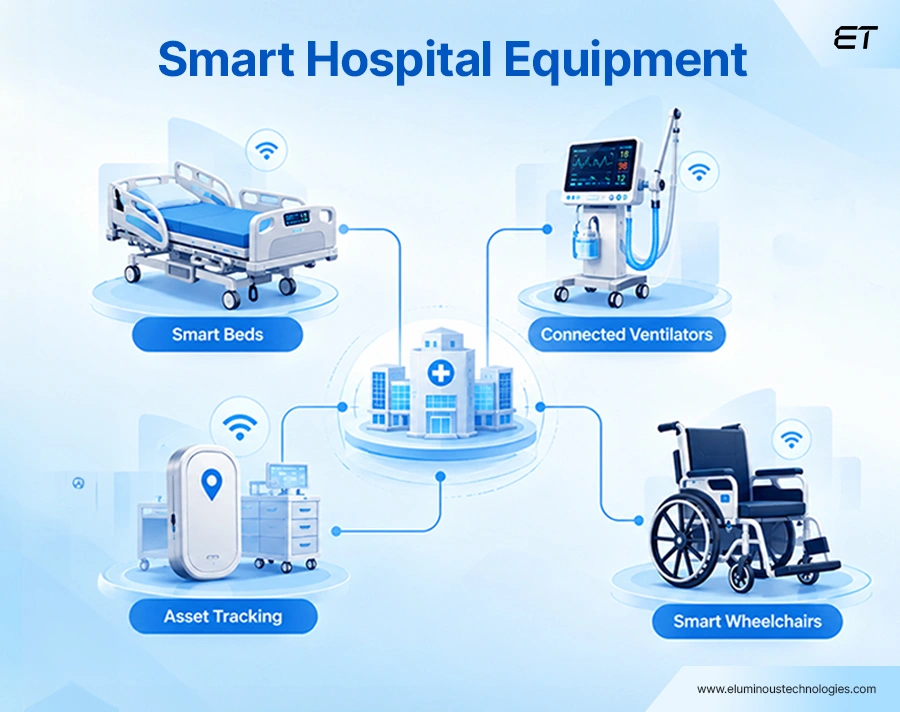
Hospitals are adopting IoT-enabled equipment to streamline operations and improve patient care. Connected devices can help track assets, monitor usage patterns, and optimize resource allocation.
Examples include:
- Smart hospital beds
- Connected ventilators
- Asset tracking systems
- Smart wheelchairs
These devices not only improve operational efficiency but also help create a safer, more responsive healthcare environment.
Implantable IoT Medical Devices
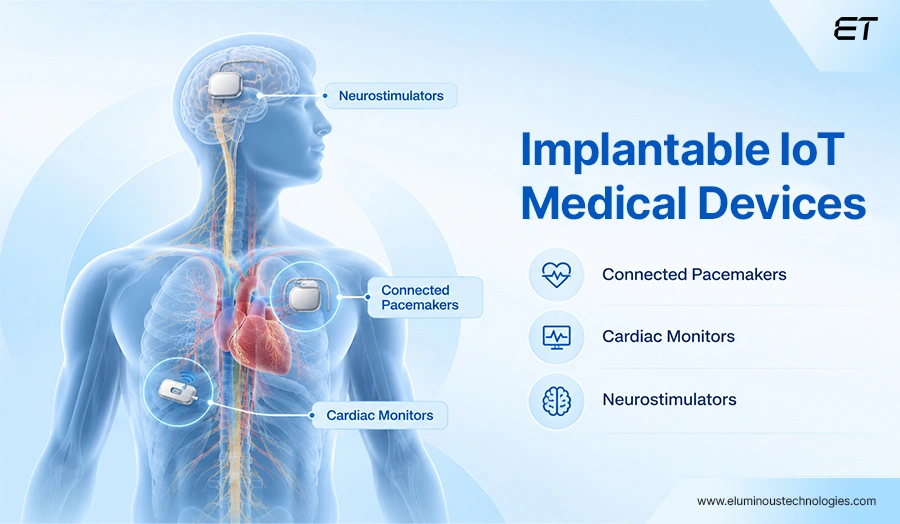
Some of the most advanced IoT medical devices are implanted directly into the body to continuously monitor and manage health conditions.
Examples include:
- Connected pacemakers
- Cardiac monitoring devices
- Neurostimulators
These devices can securely transmit health information to you, enabling continuous monitoring and reducing the need for frequent in-person consultations.
Why Device Connectivity Matters
While these devices serve different purposes, they share one critical requirement: the ability to communicate with healthcare applications, cloud platforms, and electronic health record (EHR) systems. Without proper connectivity and integration, valuable healthcare data remains siloed, limiting the full potential of IoT medical devices. This is why medical device integration has become a key focus for healthcare organizations building connected, data-driven care ecosystems.
Why Medical Device Integration Is Critical for Connected Healthcare
Deploying IoT medical devices is only the first step toward building a connected healthcare ecosystem. The real challenge begins when you need those devices to communicate with Electronic Health Records (EHRs), hospital management systems, telehealth platforms, and other applications.
Without proper integration, valuable patient data often remains trapped in isolated systems, forcing you to switch between platforms, manually enter information, and work with incomplete patient records. This not only slows down workflows but can also impact care quality and decision-making.
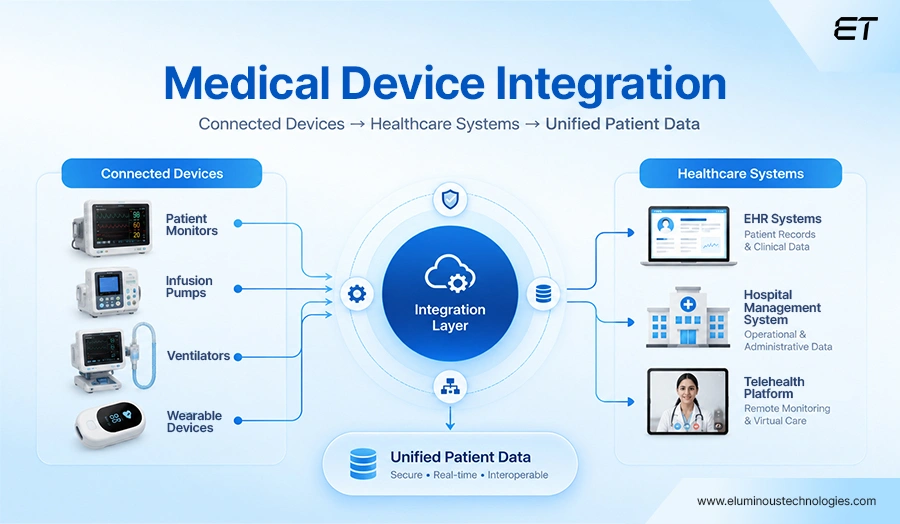
Medical device integration addresses this challenge by creating a seamless flow of information across the healthcare ecosystem.
What Is Medical Device Integration?
Medical device integration connects medical devices with healthcare software, databases, and clinical applications to enable secure, automated data exchange.
Instead of operating as standalone systems, integrated devices can automatically share patient information with relevant platforms, ensuring that you always have access to the most up-to-date data.
For example, a connected glucose monitor can automatically transmit patient readings to an EHR system. Physicians can review trends, adjust treatment plans, and intervene when necessary without relying on manual data entry.
Key Benefits of Medical Device Integration
Improved Data Accessibility
You can access accurate patient information from a centralized system rather than gathering data from multiple disconnected sources. This improves visibility across departments and supports faster clinical decisions.
Reduced Manual Data Entry
Manual data transfer is time-consuming and error-prone. Integration automates data synchronization between devices and healthcare systems, reducing administrative workloads while improving data accuracy.
Enhanced Clinical Decision-Making
Real-time access to patient data enables you to detect abnormalities earlier, monitor treatment effectiveness, and make informed decisions based on continuously updated health information.
Better Patient Monitoring
Integrated IoT medical devices support continuous patient monitoring by transmitting health data directly to healthcare platforms. This lets you identify potential issues early and respond faster when intervention is needed.
Increased Operational Efficiency
By eliminating disconnected workflows and duplicate processes, you can streamline operations, improve staff productivity, and deliver a more efficient patient experience.
Systems Commonly Integrated with IoT Medical Devices
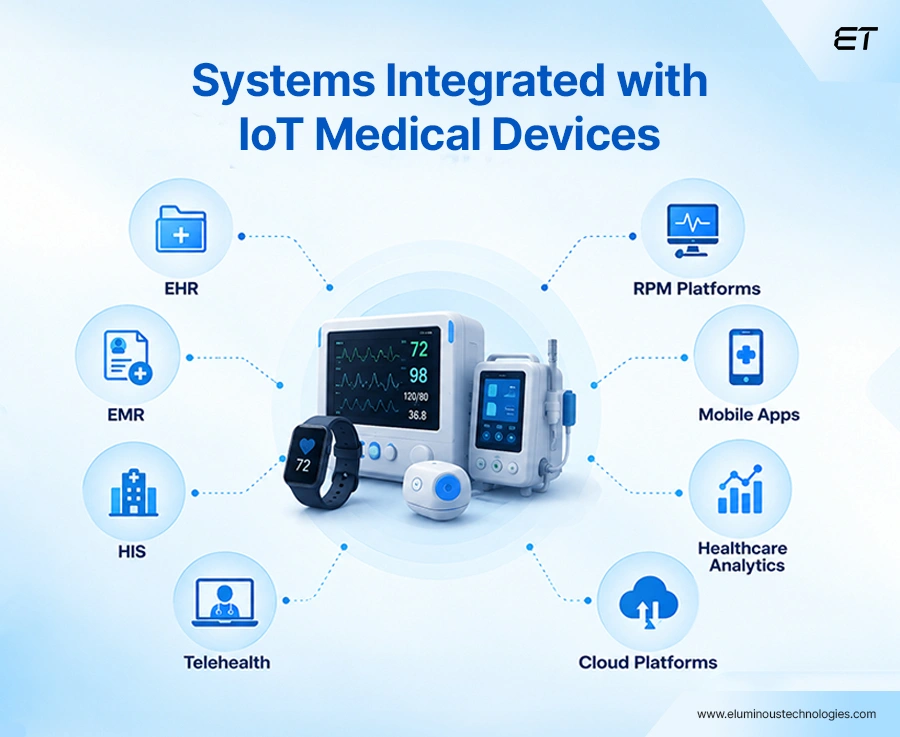
Depending on the use case, IoT medical devices can integrate with:
- Electronic Health Record (EHR) systems
- Electronic Medical Record (EMR) platforms
- Hospital Information Systems (HIS)
- Telehealth applications
- Remote Patient Monitoring (RPM) platforms
- Mobile healthcare apps
- Healthcare analytics solutions
- Cloud-based healthcare platforms
The more seamlessly these systems work together, the more value you can derive from your connected investments.
Why Integration Matters More Than Ever
As you continue adopting connected technologies, the number of devices generating patient data is growing rapidly. However, collecting data alone isn’t enough. To unlock the full potential of IoT medical devices, you need a strategy that ensures interoperability, security, and seamless communication across the entire healthcare ecosystem.
Without integration, smart devices remain isolated tools. With integration, they become part of a connected infrastructure that supports better patient outcomes, operational efficiency, and data-driven healthcare delivery.
Benefits of IoT Medical Devices in Healthcare
Beyond collecting patient data, these devices enhance the overall healthcare experience for both providers and patients.
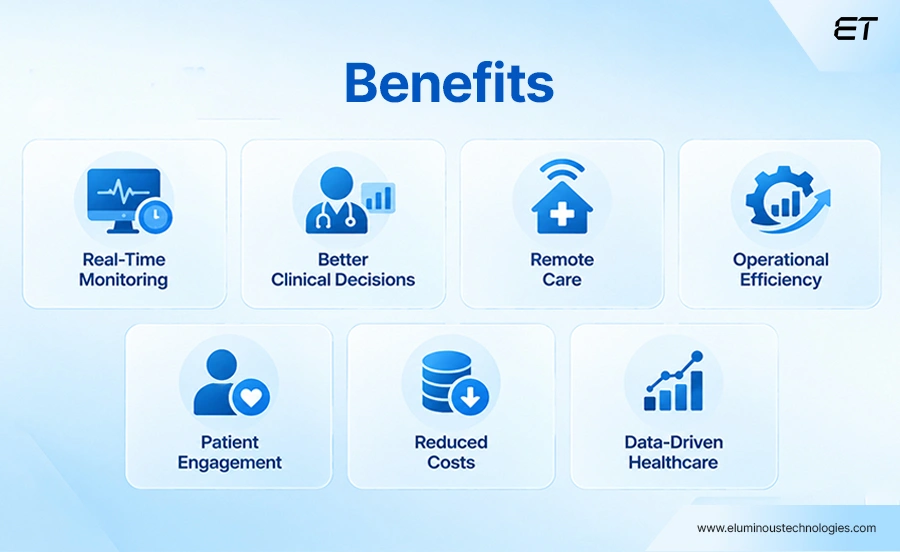
Real-Time Patient Monitoring
One of the biggest advantages of IoT medical devices is their ability to continuously collect and transmit patient data. You can monitor vital signs, track chronic conditions, and receive alerts when readings fall outside predefined thresholds.
This real-time visibility enables proactive care, helping your teams identify potential issues before they escalate into serious health complications.
Improved Clinical Decision-Making
Timely, accurate patient data helps healthcare professionals make more informed decisions. Instead of relying solely on periodic assessments or patient-reported information, clinicians can leverage continuously updated health data to evaluate treatment effectiveness and adjust care plans accordingly.
This leads to more personalized treatment and better patient outcomes.
Enhanced Remote Care Delivery
The rise of remote patient monitoring has made healthcare more accessible than ever. IoT-enabled devices let physicians track patient health from almost anywhere, reducing the need for frequent in-person visits.
This helps manage chronic diseases, support post-discharge care, and extend healthcare services to patients in remote locations.
Increased Operational Efficiency
You often deal with fragmented systems and manual processes that consume valuable time and resources. Connected medical devices help automate data collection and reporting, reducing administrative burdens on your staff.
When integrated with healthcare platforms, these devices can also eliminate duplicate data entry and streamline clinical workflows across departments.
Better Patient Engagement
Patients today want greater visibility into their health and treatment progress. Many IoT medical devices provide real-time health data through mobile apps and patient portals, encouraging individuals to take a more active role in managing their well-being.
Improved engagement often translates into better treatment adherence and long-term health outcomes.
Reduced Healthcare Costs
By enabling early intervention, reducing unnecessary hospital visits, and supporting preventive care, IoT medical devices can lower healthcare costs over time. You can optimize resource use while patients benefit from more efficient, accessible care delivery.
Stronger Data-Driven Healthcare Ecosystems
Perhaps the biggest benefit is turning healthcare data into actionable insights. When connected devices work seamlessly with EHRs, analytics platforms, and healthcare applications, you gain a unified view of patient information and operational performance.
This lets you move beyond reactive care and build smarter, data-driven healthcare ecosystems.
Challenges of Implementing and Integrating IoT Medical Devices
As you expand your connected ecosystems, you’ll likely encounter technical, operational, and regulatory challenges that can affect adoption and long-term performance.
Understanding these hurdles early can help you develop a more effective integration strategy and maximize the value of your IoT investments.
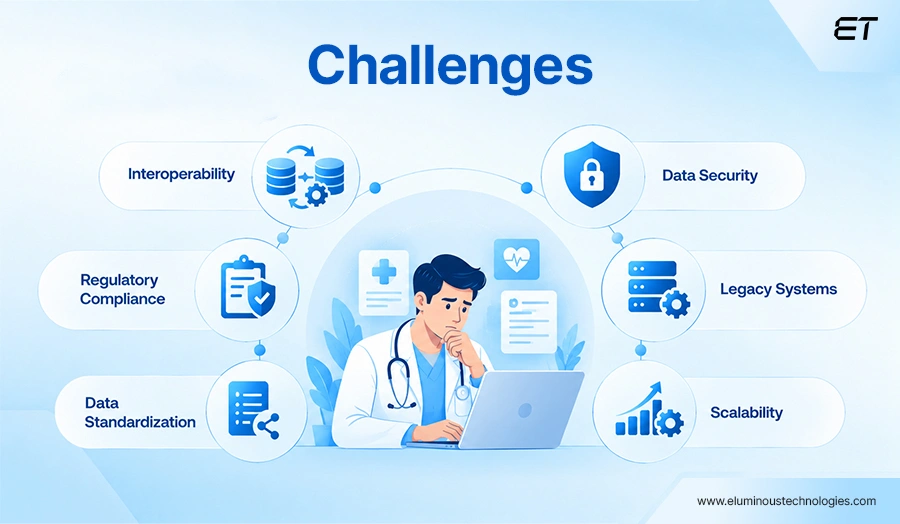
Interoperability and Compatibility Issues
Healthcare environments typically consist of multiple systems, devices, and software platforms from different vendors. Ensuring seamless communication between IoT devices, EHR systems, mobile applications, and cloud platforms can be challenging when each solution uses different protocols and data formats.
Without proper interoperability, you risk creating disconnected systems that limit data accessibility and reduce operational efficiency.
Data Security and Patient Privacy Risks
IoT devices continuously collect and transmit sensitive patient information, making security a top priority. Any vulnerability within a connected device or communication channel can potentially expose healthcare data to unauthorized access.
To protect patient information, you must implement robust security measures, including encryption, secure authentication, access controls, and continuous monitoring, across the connected healthcare ecosystem.
Regulatory Compliance Requirements
You must comply with strict regulations governing patient data, medical devices, and healthcare information systems. Integrating connected devices while maintaining compliance can be complex, particularly when data is shared across multiple platforms and stakeholders.
Ensure your IoT medical device infrastructure aligns with applicable healthcare and data protection regulations while maintaining system reliability and security.
Integrating with Legacy Healthcare Systems
Many healthcare facilities still rely on legacy infrastructure that wasn’t designed to support modern IoT technologies. Connecting new medical devices to older systems often requires custom integrations, middleware, or infrastructure upgrades.
Without a well-planned approach, you may face increased implementation costs, longer deployment timelines, and ongoing maintenance challenges.
Data Management and Standardization
Connected medical devices generate large volumes of data from multiple sources. Managing this information effectively becomes difficult when devices produce inconsistent, incomplete, or non-standardized data formats.
Standardized data management processes are essential to ensure data accuracy, improve interoperability, and support meaningful analytics across the healthcare ecosystem.
Scalability Challenges
You may start with a handful of connected devices but eventually expand to hundreds or even thousands across multiple locations. As the number of devices grows, so do the demands on network infrastructure, data storage, system performance, and device management.
So, you need scalable IoT architectures that can support future growth without compromising security, performance, or user experience.
Balancing Innovation with Integration
The biggest challenge is ensuring these devices work seamlessly within your existing healthcare ecosystem. A connected glucose monitor, wearable sensor, or smart infusion pump delivers limited value if its data remains isolated from the systems you rely on every day.
That’s why successful healthcare organizations focus on medical device integration, interoperability, and long-term scalability. With the right strategy, these challenges can become opportunities to build a truly connected healthcare environment.
Best Practices for Successful Medical Device Integration
Following proven best practices can help you build a connected healthcare ecosystem that delivers long-term value.
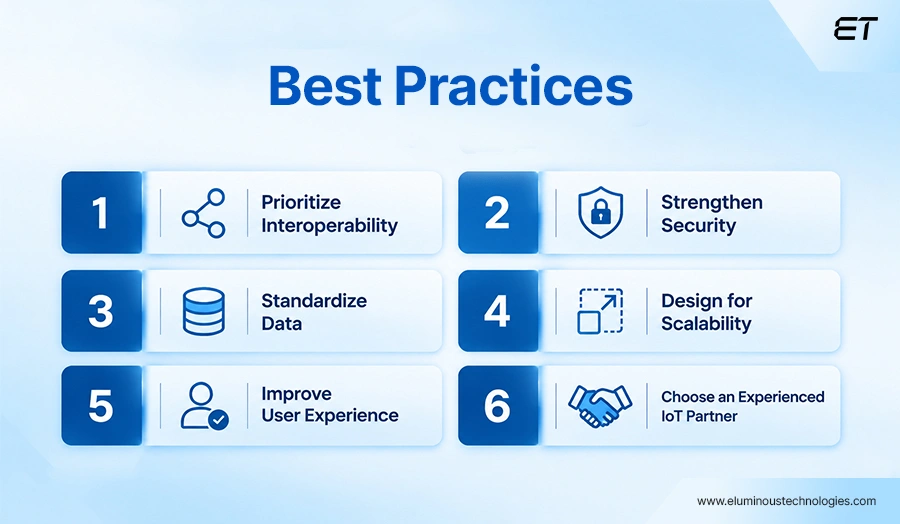
Prioritize Interoperability from the Start
One of the most common integration challenges stems from incompatible systems and data formats. Before deploying IoT medical devices, evaluate how they will connect with existing EHRs, healthcare applications, telehealth platforms, and hospital information systems.
Choosing solutions that support industry standards and interoperability frameworks can significantly reduce integration complexity and improve long-term flexibility.
Ensure Robust Data Security Measures
Connected medical devices continuously transmit sensitive patient information, making cybersecurity critical.
Healthcare organizations should implement:
- End-to-end encryption
- Multi-factor authentication
- Role-based access controls
- Continuous security monitoring
- Regular software and firmware updates
A proactive security approach helps protect patient data while maintaining compliance with healthcare regulations.
Standardize Data Across Systems
Data inconsistency can create significant barriers to effective healthcare analytics and decision-making. Standardized data formats and integration protocols ensure IoT-generated information stays accurate, accessible, and actionable across all connected systems.
This becomes increasingly important as the number of connected devices grows.
Design for Scalability
You might begin with a limited IoT deployment before expanding across departments, facilities, or care networks. Building a scalable architecture from the outset helps avoid costly infrastructure limitations later.
Cloud-based healthcare platforms, modular integration frameworks, and flexible APIs can support long-term growth while maintaining performance and reliability.
Focus on User Experience
Even the most advanced integration strategy can fail if systems are difficult to use. Clinicians, administrators, and support staff should be able to access relevant information quickly without navigating multiple disconnected platforms.
Simplifying workflows and delivering data through intuitive interfaces can improve adoption and maximize the value of connected healthcare technologies.
Partner with an Experienced IoT Development Team
Integrating IoT devices often means connecting multiple technologies, healthcare systems, and data sources while meeting regulatory and security requirements.
An experienced healthcare IoT development partner can help you design, implement, and scale connected healthcare solutions more efficiently while minimizing integration risks.
Future Trends in IoT Medical Devices
As healthcare continues to embrace digital transformation, IoT devices are evolving beyond basic connectivity and remote monitoring. Emerging technologies can deliver more personalized, predictive, and data-driven care.
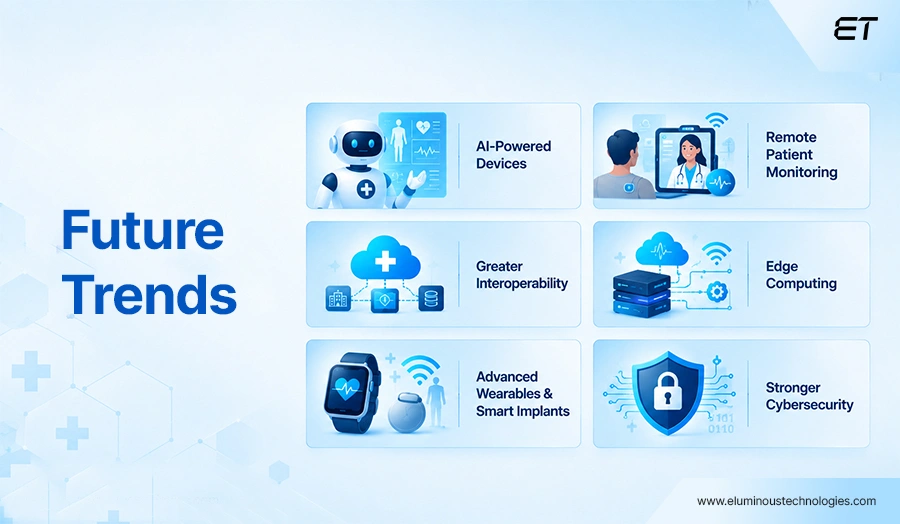
AI-Powered Medical Devices
The next generation of IoT medical devices will increasingly leverage Artificial Intelligence (AI) to analyze patient data in real time. Rather than simply collecting information, these devices can identify patterns, detect anomalies, and generate actionable insights.
From early disease detection to predictive maintenance of medical equipment, AI is expected to play a pivotal role in improving clinical outcomes.
Expansion of Remote Patient Monitoring
Remote Patient Monitoring (RPM) is rapidly becoming a core component of modern healthcare delivery. As connected medical devices become more sophisticated, you can monitor a wider range of health conditions outside traditional clinical settings.
This trend will improve chronic disease management, reduce hospital readmissions, and expand access to care for patients in remote areas.
Greater Focus on Interoperability
As you adopt more connected technologies, demand for seamless medical device integration will keep growing. Future healthcare ecosystems will rely on improved interoperability standards that enable IoT medical devices, EHR platforms, telehealth systems, and healthcare applications to exchange data effortlessly.
Edge Computing for Faster Healthcare Insights
Traditionally, healthcare data is transmitted to centralized cloud platforms for processing. With edge computing, IoT devices can process certain data closer to the source, enabling faster analysis and response times.
This matters in critical care environments where timely insights and immediate decisions can directly affect patient outcomes.
Advanced Wearables and Smart Implants
Wearable health technologies are expected to become more accurate and compact, tracking a broader range of physiological parameters. At the same time, implantable IoT devices will continue to evolve, enabling continuous monitoring and personalized treatment for complex medical conditions.
These advancements will provide you with richer data streams and a more comprehensive view of patient health.
Stronger Cybersecurity Frameworks
As the number of connected medical devices grows, you’ll need to place increasing emphasis on cybersecurity. Future IoT ecosystems will incorporate advanced security measures, automated threat detection, and robust access controls to protect sensitive patient information and ensure regulatory compliance.
Security will become a fundamental component of healthcare innovation rather than an afterthought.
Endnotes
IoT medical devices enable real-time patient monitoring, improve clinical decision-making, and support more efficient care delivery. However, connected medical devices’ true value lies in their ability to exchange data with healthcare applications, EHR systems, and other critical platforms.
As you continue to invest in connected technologies, medical device integration will play a key role in creating scalable, secure, and interoperable healthcare ecosystems.
If you’re looking to develop connected healthcare solutions or streamline data exchange between medical devices and healthcare systems, explore our Healthcare IoT Solutions to see how purpose-built integrations can help in your digital transformation journey. For broader connected technology initiatives, discover our IoT Solutions designed to help businesses build secure, scalable, and future-ready IoT ecosystems.
Frequently Asked Questions
1. What are IoT medical devices?
IoT medical devices are connected healthcare equipment that use sensors, software, and internet connectivity. They collect, transmit, and exchange health data in real time. These devices can integrate with EHR systems, healthcare applications, and cloud platforms to support remote monitoring and informed clinical decision-making.
2. What is the Internet of Medical Things (IoMT)?
The Internet of Medical Things (IoMT) refers to a network of connected medical devices, healthcare software, and communication technologies that enable seamless data exchange across the healthcare ecosystem. IoT medical devices are a key component of the IoMT ecosystem.
3. How do IoT medical devices work?
IoT medical devices use embedded sensors to collect data and transmit it via Wi-Fi, Bluetooth, or cellular networks. Connected healthcare platforms then process the data, allowing providers to monitor patients, analyze trends, and respond to potential health concerns in real time.
4. What are some examples of IoT medical devices?
- Common examples of IoT medical devices include:
- Smartwatches and wearable health trackers
- Connected glucose monitors
- Smart infusion pumps
- Pulse oximeters
- ECG monitoring devices
- Connected pacemakers
- Remote patient monitoring systems
5. What is medical device integration?
Medical device integration connects medical devices to healthcare systems, such as Electronic Health Records (EHRs), Hospital Information Systems (HIS), telehealth platforms, and analytics tools, enabling secure, automated data exchange.
6. Why is medical device integration important?
Medical device integration eliminates data silos, reduces manual data entry, improves interoperability, and gives healthcare professionals real-time access to patient information. This enables faster clinical decisions and improves operational efficiency.
7. What are the benefits of IoT medical devices in healthcare?
- IoT medical devices offer several benefits, including:
- Real-time patient monitoring
- Improved clinical decision-making
- Enhanced remote care delivery
- Increased operational efficiency
- Better patient engagement
- Reduced healthcare costs
8. What challenges do healthcare organizations face when implementing IoT medical devices?
Common challenges include interoperability issues, cybersecurity risks, regulatory compliance requirements, integration with legacy systems, data standardization concerns, and scalability limitations.
9. Can IoT medical devices integrate with EHR systems?
Yes. Modern IoT medical devices can integrate with Electronic Health Record (EHR) systems, enabling automatic data transfer, improved patient record accuracy, and streamlined clinical workflows. Effective EHR integration is often a critical component of medical device integration initiatives.

Industrial Internet of Things (IIoT): Applications, Benefits, and Use Cases
It’s night shift. A conveyor belt on a bottling line suddenly stops working. The whole line halts. No maintenance technician…

Healthcare IoT Security: Risks, Best Practices, and How to Secure Connected Devices
Hospitals have many connected devices like patient monitors, wearable sensors, and clinician dashboards. Each is crucial, but only if it…


